Derviş ‘Ömer’s Mother Mocks a Saint

iznik-tile.jpg

As I’ve noted before, Ottoman saints’ lives, especially those from the seventeenth century forward, are often wonderful sources for catching glimpses of everyday life in the Ottoman world, or, rather, ordinary life in contact with the extraordinary powers and abilities of a saint. The eighteenth century menâkıb of Şeyh Hasan Ünsî, which I have featured here several times before, has proven to be an especially good source in this regard, and the story I’ve translated here is yet another instance of the intersection of the saint’s life with the everyday lives of ordinary residents of Istanbul. The story is narrated to the text’s author, Ibrahim Hâs, by one Derviş ‘Ömer, about whom we are given no further details beyond what can be picked up from within the story.

There are several points of significance worth pointing out in relation to this account: one, this story revolves around women’s interactions with Şeyh Hasan. Note that the women in the story interact with the saint quite freely, leaving their house to visit him, entering his presence, kissing his hand, and so forth- while this sort of interaction sometimes drew criticism from other quarters of Ottoman society, here there is no sense of impropriety or critique at all. What is ‘problematic’ from the view of the saint and of the storyteller and the rest of his household, however, is the fact that Derviş ‘Ömer’s mother (whose name is not given in the story), while in some sense a ‘believer’ in the saint, also feels no compunction in parodying his actions, namely, his practicing the ritual of ‘reading and blowing,’ that is, reciting certain efficacious prayers then blowing upon the person seeking healing, the idea being that the saint’s breath will convey healing bereket. If as you imagine a şeyh doing this you find it a bit humorous, you’d be in the company of the people in ‘Ömer’s household, too: hence this story helps us to imagine what sorts of things an eighteenth century Ottoman subject might find funny, such as, evidently, pantomiming a saint.

If you’re also thinking that perhaps pantomiming a saint might not be especially pious and could lead to trouble- especially with Şeyh Hasan, who seems to have been a bit testy- you’d also be right, and that is the ultimate moral of the story, which follows after this helpful illustration:
cps_w66635b_fp_dd-2
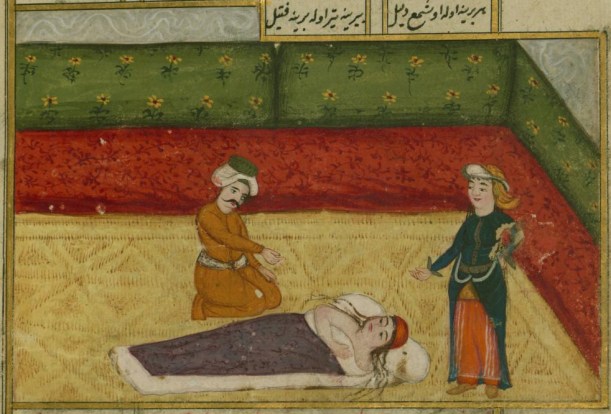
Hailing from a different story, this illustration from Atayı’s Hamse provides a good visualization of sleeping arrangements in an Ottoman house (though the furnishings along the wall indicate a more lavishly equipped dwelling than the one suggested in our story). (W.666.35B)

There was a child from among our relatives in our household who became sick. My mother and the child’s mother, along with a couple other women of our household, went to visit the şeyh of Aydınoǧlu Tekke, Ünsî Hasan Eendi, in order for him to read over the child, saying to him, ‘Read over this child.’ The venerable Şeyh read over and blew upon the child, then my mother with the other women came home, and in that very moment the child became well.

After my mother returned from visiting the venerable Şeyh, in order to make the women and children in our household laugh said to them, ‘Şeyh Efendi read and blew like this upon the boy—come, let me read over you!’ Saying this she summoned the women in the household and some came and sat down before her. My mother filled her cheeks with air then blew on them, and they all laughed. She did this a couple of times.

When evening came we performed the evening prayers, then put on our clothes for sleeping. There were no people from without the household (nâmahrem) among us. Our house being narrow, we all lay down in one room. We all went to sleep. At some point in the night from our midst there came a great groan and the sound of kicking about. Exclaiming, ‘Who is this, what’s going?’ we all woke up. I lit a candle and saw that it was my mother! She had turned a shade of deep purple and with great anguish she was kicking about, her eyes closed, saying nothing, her mind gone, hearing nothing of our words. We were all scattered about [the room], but we gathered to her, not knowing what to do. She kicked about in this condition for about an hour, struggling. This kept on until suddenly, she went senseless and lay down. ‘Is she dead?’ we cried, but checking we saw that she was fine. For about two hours she lay senseless. Afterwards she gradually grew paler, and a while after that her intellect returned and she opened her eyes, but she was confused. We said, ‘O mother, what happened to you? What changed your condition—this evening there was nothing wrong?’

With sorrow she replied, ‘This evening we all lay down. But while you all fell asleep, I was unable to sleep. I could not close my eyes. I saw before my eyes that the Şeyh Efendi that read over our child had appeared, and at that very moment with power he took hold of my throat and said, “Why did you take me for a laughingstock—am I your laughingstock? Does anyone take me for an object of ridicule?” Saying this he gripped my throat such that while I wanted to cry out and shake it off, I was unable to do so; finally, I passed out. I don’t know anything else.’ Continue reading “Derviş ‘Ömer’s Mother Mocks a Saint”
The Art of Self-Knowledge

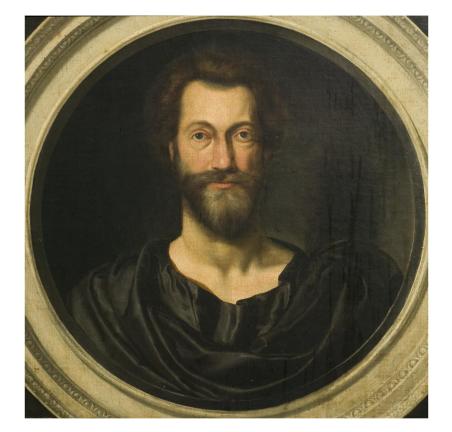
JOhn Donne
Portrait of John Donne (1573-1631), painted in 1622. V&A DYCE.5

‘If we remember that such exhortations resound throughout the popular treatises of our period, whether Puritan, Catholic or Anglican, we may avoid a tendency to attribute the acute self-consciousness of English meditative poetry in this era chiefly to Donne’s example, or to declare that “Herbert’s extreme insistence on individual responsibility” is “rather Puritan than ‘Churchly,'” or to attribute to the influence of Epictetus the presence of such a consummately Christian view as that expressed by Donne in his significant lines to Rowland Woodward:

Seeke wee then our selves in our selves; for as
Men force the Sunne with much more force to passe,
By gathering his beames with a christall glasse;

So wee, If wee into our selves will turne,
Blowing our sparkes of vertue, may outburne
The straw, which doth about our hearts sojourne.

But may we not argue that the fierce inward scrutiny of Puritanism intensified this emphasis, put a “finer edge on the spiritual life” by pursuing methods of analysis that “called for more intelligence and more concentration than any of the Catholic techniques”? I believe that the foregoing chapters will have shown that such a view represents a misapprehension of the devotional techniques of the Counter Reformation. Intense concentration on the “motions” of the self is not a peculiar tendency of Puritanism, though it has some peculiar aspects, deriving from Puritan theology… But so far as self-examination is concerned the fact is that both Catholic and Puritan, while accusing each other bitterly of neglecting the inner life, were pursuing the art of self-knowledge by methods equally intense and effective- methods that had, on both hands, developed a subtlety of self-awareness that went far beyond the popular achievements of the Middle Ages.’

Louis L. Martz, The Poetry of Meditation: A Study in English Religious Literature of the Seventeenth Century (New Haven: Yale University Press, 1954)121-122.

A Saint of the Rural Road in Ottoman Anatolia

Ottoman Sofra
A rare example of an early 17th century Ottoman sofra- a round cloth, in this beautifully decorated with tulip and other motifs- spread out on the floor or ground in order for food to be placed on it, functioning like a dining room table. While the saint in the story below probably would not have had so finely crafted a sofra, this one gives an idea of what such a textile looked like- and how a reader of the story might have imagined a saint’s sofra to look. (St. Louis Art Museum 175:1952)

Rural religious life in the pre-modern Islamic world remains relatively little known to historians, at least in comparison to religious life in medieval and especially early modern Western Europe. This is partially due to the absence of many of the confessional, disciplinary, and other institutional structures and organs, such as the Inquisition in its various forms, whose operations ensured that much rural life- primarily, but not exclusively, religious- would be quite visible to future historians. For a context such as the Ottoman Empire, our sources for rural life in general are rather scarcer. Travel literature, population and resource surveys, and similar sources are one means of uncovering early modern life among peasants, nomadic peoples, and other inhabitants of rural spaces and places. The following life of a rural saint of the 16th century, which I’ve taken from an Ottoman Turkish biographical compilation by the poet and author Nevîzâde Atâyî (1583–1635), represents another potential route for recovering aspects of religious and social life in the Ottoman countryside- which is where, after all, the majority of the population in fact lived.

I do not know how Atâyî, who was very much a product of the Ottoman elite literary and learned milieu, came by his knowledge of the life of Ahmed Dede, the saint featured in this account, but it seems likely that because of his position on an important route between two well-established cities in western Anatolia, Ahmed Dede was known to people in the imperial center (including, evidently, Selim II). While this account of his life comes from an elite, urban writer, and was written in ornate Ottoman Turkish prose, heavy with Persian vocabulary and constructions, a style I have tried to reproduce somewhat in my translation, it remains valuable for the inadvertent insights into what might have constituted a saint in rural Anatolia. Ahmed Dede, who was known by several other names as well, while he received initiation from sufi masters both in his home village and during a sojourn in Istanbul, seems to become recognized as a saint due to his generous acts of hospitality, and his reputation for miraculously fertile grain crops, crops which he himself cultivated. Previous eras of historiography would probably have suggested that Ahmed Dede was a ‘survival’ of a pre-Islamic fertility cult: while such an idea is, for a number of reasons, quite untenable, it should come as no surprise that peasants and others in the rural world would value divine protection for crops, and that generosity in one’s abundant material possessions would count as a major marker of sainthood.

I have taken the extra step in the below translation to include footnotes explicating some of the less obvious references and allusions that our author makes, as well as to note a couple of places where I am not myself entirely confident that I understood Atâyî’s meaning!

Sofra close up

Şeyh Ahmed Dede: He came into the world in a village named Gırbalcı, near the town of Kütahya [1]. Among the common people he was known as Kalburci Şeyhi as well as Mıhmandâr and Çavdârli after the tribe. From the ‘ulamâ of his native place he obtained learning and, being from birth ordained and whetted for taking ‘mystical letters and meanings,’ he joined the service of Şeyh Sinân Karamânî, then inclined towards the beholding the divinely graced Abdüllatîf Efendi. It is related that one day he [Ahmed Dede] was present at a lesson with two companion when, while the aforementioned şeyh was in the time of his spiritual brightness and openness [to God], each one made supplication concerning the desire that was implanted within him. The aforesaid şeyh’s arrow of supplication having been shot and hitting God’s giving answer, one of them became, in accord with his heart’s desire, an officer in the army, while another, in concordance with his soul’s inclination, became part of the folk of knowledge—but the subject of this account, [Ahmed Dede], obtained the grace that he, like the basin and table of Ibrahim, would not have his licit wealth (mâl-i halâl) become exhausted [2].

Afterwards, coming to Istanbul, in the service of the pole of the sphere of divine reality Merkez Efendi he perfected his spiritual wayfaring. After being authorized in giving guidance he became eminent through the gracious oversight of Kastamonulu Şabân Efendi. Ultimately he returned to his village and set up in his well-known zâviye [3], feeding travelers and giving perfect honor to passers-by. In this manner through the months and days he gave praise to God, this honorer of guests of the house of Islam dying in the year 978/1570—to his spirit be divine mercy!

The aforesaid saint’s miraculous gifts of grace (kerâmât) with divine might are well-known—like the brilliant sun and the haloed moon, day and night, he spread out bread and table. He was a Milky Way of the lined-up food-cloth stretched out as constant beneficence, his laughing face like a damask rose, as he made manifest the open sofra, he a spring-time cloud of constant out-pouring, a comfort-giving hand, dressed in nobility, a sea of sainthood, a pocket of aid, treasury of the unseen and traveling-wallet of grace, of holy ardor, the cultivated field of the one in need of the bread of blessing is from the blessings of God. Continue reading “A Saint of the Rural Road in Ottoman Anatolia”

A Human Figure in Profound Meditation

A12399.jpg
The Repentant Magdalen
c. 1635/1640, by Georges de la Tour (1593-1652),
oil on canvas (Nat. Gall. of Art 1974.52.1)

‘Georges de la Tour, like John Donne, is one of the rediscoveries of the twentieth century; and the admiration that both have evoked in our own time may be traced to the same fundamental causes. I do not mean simply the photographic realism of the composition, but rather the way in which every detail of the work is controlled by a human figure in profound meditation. This person’s thoughts are not abstract: the left hand, with its sensitive, tapered fingers, probes the eyesocket of a skull; the arm, so delicately clothed, conveys a rude sensation to the brain. Meanwhile the eye is focused on a mirror, where we are accustomed to pursue the work of preparing “a face to meet the faces”” that we meet: yet here the inquiring eye meets “the skull beneath the skin,” a skull that seems to devour the book on which it rests. Sight and touch, then, meet to form these thoughts, meditative, piercing, looking through the mirror, probing whatever lies beyond. For me, at least, it suggests simultaneously Donne and Yeats: Donne in his shroud and Yeats in his tower, especially the figure that ends A Vision: “Day after day I have sat in my chair turning a symbol over in my mind, exploring all its details, defining and again defining its elements, testing my convictions and those of others by its unity, attempting to substitute particulars for an abstraction like that of algebra.”

Louis L. Martz, The Poetry of Meditation: A Study in English Religious Literature of the Seventeenth Century (New Haven: Yale University Press, 1954), 1.

The Lion, the Lady, and the Dervishes: Şeyh Hasan Ünsî’s Transformation

iznik-tile.jpg

Previously I discussed the ‘conversion’ narrative of a major late seventeenth into early eighteenth century Muslim saint of Istanbul, Şeyh Hasan Ünsî Halvetî (1643-1723), whose life was chronicled in great detail in a menâkıb (saint’s life) by Ibrahim Hâs. The story I’ve translated below comes from a slightly later period in the saint’s life, after his şeyh, Karabaş-i Velî (also known as Karabaş ‘Alî: he wore a black turban, hence his being called ‘Black-Head’) had died in the Sinai while making the ḥajj, in 1685. Hasan Ünsî had excelled in ascetic discipline and spiritual insight, his hagiographer tells us, such that Karabaş ‘Alî elevated him over all of his other halifes (Ar. khalīfa, delegates sent from a şeyh/shaykh), and sent him back to Istanbul to establish a center for worship and instruction in the sufi path. Hasan Ünsî settled in a space near the Hagia Sophia, the Acem Aǧa Mosque, built upon parts of the ruins of a pre-Ottoman Byzantine church, St. Mary Chalkoprateia (today the church has sunk deeper into ruin, and only parts of the mosque remain standing- see this excellent blog post for more details on the ‘deep history’ of the site). There he continued his ascetic practices, led zikr (a sufi ritual of ‘remembrance’ of God), and instructed disciples.

But his residency here was not to be entirely peaceful: since the early decades of the 17th century, the Ottoman lands had seen the rise of various ‘puritanical’ Islamic movements and tendencies, often looking back to the writings and life of a 16th century pietistic preacher, Mehmed Birgivî, for inspiration. Many groups and individuals inspired by the puritanical texts, movements, and leaders that arose over the course of the century were opposed to such things as the veneration of the saints, sufi rituals like zikr/dhikr, and widespread practices such as tobacco-smoking and coffee-drinking (though opposition to the former was for a long time widespread beyond so-called ‘puritan’ circles). Unusually- for theological movements of this nature had developed before in various places in the Islamic world- many advocates of a purified Ottoman Islam believed it appropriate to use force to achieve their moral and theological goals. Hasan Ünsî evidently had to deal with Ottoman puritans in his mosque (which, not unusually, also functioned as a living space for dervishes, students, and others), in the form of students of jurisprudence (suhtelar). We are told that, having adopted the beliefs of the ‘people of denial’ (ehl-i inkâr), these students (some of whom Hasan, who himself had an ‘exoteric’ education in the Islamic sciences, had previously instructed) began trying to drive the saintly şeyh from the mosque, in order to ‘purify’ the space of ritual uses they opposed, and to claim the space exclusively for themselves.

To make a long story short, the struggle between Hasan Ünsî and the puritanical legal students grew hotter and hotter and increasingly physical, to the point that, our hagiographer claims, the students contemplated murdering the şeyh! It culminated in a show-down in which, after trying to argue his case using verse from the Qur’an, Şeyh Hasan manifested his ‘celâl,’ or divinely-given wrathful majesty- and the students began dying of mysterious accidents or suddenly falling ill, to the point that in a week’s time none remained in the mosque! During the course of these incidents, one of Şeyh Hasan’s dervishes, Kebâbî Ahmed Dede, asked whether the şeyh ought to moderate the outflow of divine celâl, to which the şeyh replied, ‘Occupy yourself with your own matters!’ At this the dervish, we are told, went pale witnessing the şeyh’s fierce celâl, and reported later that ‘all my being went shaky and my mind was thrown into disorder’ when the şeyh said these words to him. This leads us to the following extended story, in which a cross-section of Istanbul society bears witness to the divine wrath and majesty at work in the şeyh: with the obvious moral throughout that opposing God’s Friends was dangerous, even if it was the ostensibly pious who were doing so.

woman-on-the-way-to-hamam.png
Woman and child on the way to the hamam, from the Rålamb Book of Costumes, depictions of residents of Istanbul in the 1650s, a couple of decades before our story.

‘One day, at mid-morning, a lady and her child passed by the Acem Aǧa Mosque, which was locked up. The child peeked into the mosque through a window, but crying out he tumbled into his mother’s arms. His mother said, ‘What was it that frightened you so?’ The child said, ‘There is a lion sitting atop the şeyh’s post [an animal skin rug that symbolized the şeyh/shaykh’s authority]! And now he is rising up!’ The lady herself then looked through the window and saw that a magnificent lion was sitting upon the post. Having seen him the lady became afraid and out of her fear began exclaiming loudly and rapidly.

Some of the dervishes there heard her and came up to her, saying, ‘Lady, what’s the matter?’ She related what had happened to them, and so they took looked through the window and saw upon the Şeyh’s post a lordly lion sitting. He opened his eyes and looked at them such that the gall-bladder of the one upon whose gaze he fell burst from fear! Being filled with great fear they were gripped with confusion. They said, ‘If this lion rises up and comes at us, the door will prove no barrier and there will be trouble!’ As they were trying to figure out a solution, one of the Şeyh’s old dervishes, Pîr Osman Dede Efendi came and forbade them from doing anything, instead sending them to their rooms. After an hour had passed he said to them, ‘Come and see—where is the lion now?’ With fear the dervishes came and peered inside the mosque through a window, but saw no lion! Instead the Şeyh [Hasan Ünsî] was upon his post. Osman Dede Efendi said to them, ‘Keep silence! Tell no one of this! For it is not permitted [to talk of it to others]!’ So saying he strongly admonished them.

Nonetheless, the story became widely known. A while later, some of the dervishes asked Osman Dede Efendi about the secret and divine wisdom of this lion. Drawing them aside, in secret he said to them: ‘This is the form that the Şeyh takes when his celâl is overwhelmingly strong in his innermost secret. Did you not see how in the course of a week the jurisprudence students came to their ends, and have you not heard what Kebâbî Ahmed Efendi said?’

İbrahim Hâs, Hasan Ünsî Halvetî ve Menâkıbnâmesi, edited by Mustafâ Tatcı (Bağcılar, İstanbul: Kırkambar Kitaplığı, 2013, 2013), 222-224. Translated by Jonathan Parkes Allen, 2018.

*

Dear reader: while you’re here, consider supporting me on Patreon, so that I can keep content like this coming along at a regular pace. Thanks!


To Be Able to Give One Has to Possess

It would be useless to turn one’s back on the past in order simply to concentrate on the future. It is a dangerous illusion to believe that such a thing is even possible. The opposition of future to past or past to future is absurd. The future brings us nothing, gives us nothing; it is we who in order to build it have to give it everything, our very life. But to be able to give, one has to possess; and we possess no other life, no other living sap, than the treasures stored up from the past and digested, assimilated, and created afresh by us. Of all the human soul’s needs, none is more vital than this one of the past…

The past once destroyed never returns. The destruction of the past is perhaps the greatest of all crimes. Today the preservation of what little of it remains ought to become almost an obsession. We must put an end to the terrible uprootedness which European colonial methods always produce, even under their least cruel aspects. We must abstain, once victory [1] is ours, from punishing the conquered enemy by uprooting him still further; seeing that it is neither possible nor desirable to exterminate him, to aggravate his lunacy would be to show oneself more of a lunatic than he. We must also keep, above all, well to the fore any political, legal, or technical innovations likely to have social repercussions, some arrangement whereby human beings may once more be able to recover their roots.

[1] That is, over the Axis: Weil wrote the book this excerpted from in 1943.

Simone Weil, The Need for Roots: Prelude to a Declaration of Duties Toward Mankind, translated by Arthur Wills (New York: Octagon Books, 1979), 51-52.

Shaykh Abū al-Ḥasan Won’t Take ‘No’ For An Answer

Şeyh Gülşeni and Disciples
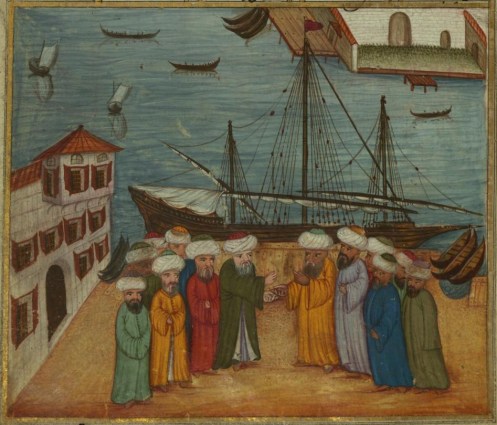
Şeyh Gülşenî (at center on the left), a 15th into 16th century Ottoman saint, bids some of his disciples and khalīfas farewell at a dock, illustrating the relationship between a saintly shaykh and his disciples also on display in the below story from another Ottoman context. From an 18th century illustrated copy of Ata’is Hamse (Walters 666.41A)

Shaykh Abū al-Wafā’ ibn Ma’rūf al-Ḥamawī—who was from among the pious ‘ulāmā and whose biography will come later—related to me that he had become a khalīfa to Shaykh [Aḥmad ibn ‘Abd al-Raḥman, (d. 1571), a Kurdish saint in the countryside north of Aleppo] after serving him for some time. He went to Cairo in order to study exoteric knowledge. He met with Shaykh Abū al-Ḥasan al-Bakrī, God sanctify his secret [1]. He treated him hospitably, but then Abū al-Ḥasan tried to get Abū al-Wafā’ to take the pledge of his ṭarīqa from him [2]. Abū al-Wafā’ refused out of regard for his shaykh [Aḥmad]. Abū al-Ḥasan kept asking, and Abū al-Wafā’ continued to refuse, until one night [Abū al-Ḥasan] entered his room and said: ‘Put your hand in mine!’ Suddenly a crack appeared in the wall, and Shaykh Aḥmad emerged and cried out, ‘Leave my disciple alone!’ [Abū al-Ḥasan] said, ‘Not possible!’ In that very moment, a fire came forth from Shaykh Aḥmad’s eye, and at that Shaykh Abū al-Ḥasan left Abū al-Wafā’ alone. Then al-Khiḍr emerged, and made peace between the two shaykhs [3]. The next morning Abū al-Wafā’s visit to Cairo was concluded so he returned home, and when he reached the village of al-Quṣayr, he entered the presence of Shaykh Aḥmad and kissed his hand, at which the shaykh smiled and said, ‘The chain of our ṭarīqa is unbroken!’

This poor one [ie the author al-‘Urḍī] had heard this story and had denied its truth, saying that people were making up lies about Shaykh al-Wafā’. But when I was young he came to Aleppo and I said to him, ‘This story, did it take place in waking life or dreaming?’ [4] He replied, ‘Waking life!’

_______________

[1] The Bakrī family was by the mid-16th century a well-established scholarly and saintly house, which would continue to be prominent all through the Ottoman period.

[2] Receiving a ṭarīqa- that is, initiation into a particular sufi lineage or path- from a shaykh could be a very personal matter of loyalty and prestige, particularly in this period, and especially in a Kurdish context- while receiving multiple affiliations was not uncommon in some contexts, and posed no problem for some shaykhs, this obviously was not universally true.

[3] Al-Khiḍr is an immortal, mysterious figure within Islam, and is often depicted appearing at opportune moments to convey knowledge or to solve a particular problem.

[4] In other words, did the ‘action’ take place in a dream-vision (which would be ‘real,’ just in a different way), or did the two shaykhs and al-Khiḍr bodily appear in poor Abū al-Wafā’s room? The former option would be rather unexceptional; the latter is a rather different and more spectacular scenario.

Muḥammad ibn ʻUmar al-ʻUrḍī, Maʻādin al-dhahab fī al-aʻyān al-musharrafa bi-him Ḥalab ʻAmman : Markaz al-Wathaʼiq wa-al-Makhtutat, 1992), 282.

On Landscapes

A Brazilian Landscape
‘A Brazilian Landscape,’ by the Dutch painter Frans Post (1612–1680). (Met. 1981.318)


The landscape has its own sound, an idiom, a dialect, a particular light and temperature and their changes with the seasons. The landscape is the median, the densest synthesis, the ordinary reality. Most people grow up not in countries or towns but in what occupies the middle ground between them: in landscapes. “We are the children of our landscape; it dictates behavior and even thought in the measure to which we are responsive to it. I can think of no better identification.” The landscape is the center, the focus of our lives, and so it is also what is most contentious, contested, embattled, and susceptible to myth-making and ideological construction. There are near-equivalent terms: region, scenery, homeland. The landscape is more important than the political-administrative district; it means more to us than the state, and its meanings reach deeper. People define themselves by the landscape in which they have their roots no less than by the nation whose citizens they are. That is why landscape paintings are not just depictions but our world en miniature: microcosms. Because the landscape designates a totality, the history of the landscape, and of the cultural landscape in particular, has come to stand for efforts to reunite divided and isolated disciplines, to recover the conviction that history can, and should be, narrated as an integral whole, as histoire totale. “Landscape” is a highly malleable term, but its core meaning is inalienable, whether we speak of ruined landscapes or the landscapes of memory, of human or urban landscapes. It always designates the cohesive form, the ensemble. All its various meanings are anchored in its primary signification, the physical landscape.

We walk or travel through landscapes. Their changing appearances and the distinctions that let us tell them apart reveal the richness of our world. The landscape is the consummate result of human labor and human genuis. It is the greatest work of art imaginable, the supreme human achievement, and when our endeavors in it come to grief, it is the greatest conceivable calamity. The landscape is the most solid substance in which man has ever wrought the objective reality of his existence—geography, Robert A. Dodgshon has written, is about the “materiality of social life”—and at once his subtlest and most atmospheric creation, to which poets, philosophers, architects, and the entire human community have each contributed their shares. So to read and decipher landscapes is to unlock a door to the history of a people, of the nations, of humanity. Because “virgin” landscapes do not—or not longer—exist, all history of the landscape is a history of cultural landscapes. Hugo Hassinger has argued that anthropogeography is simply the “morphology of the cultural landscape,” the study of the tectonics of the social sphere, the inertia of the built world, the visible distribution of power and powerlessness, to mention only a few aspects. Historians are experts in matters of cultural forms: (cultural) morphologists. They take an interest in surfaces, and so they must be good phenomenologists and physiognomists if they hope to detect essential processes. They read the landscape like a text, carefully peeling off layer upon layer as though it were a palimpsest.

Karl Schlögel, In Space We Read Time: On the History of Civilization and Geopolitics, translated by Gerrit Jackson (New York City: Bard Graduate Center, 2016), 235-237.

St. Paisius Loves Grapes

Paisi Velichkovski
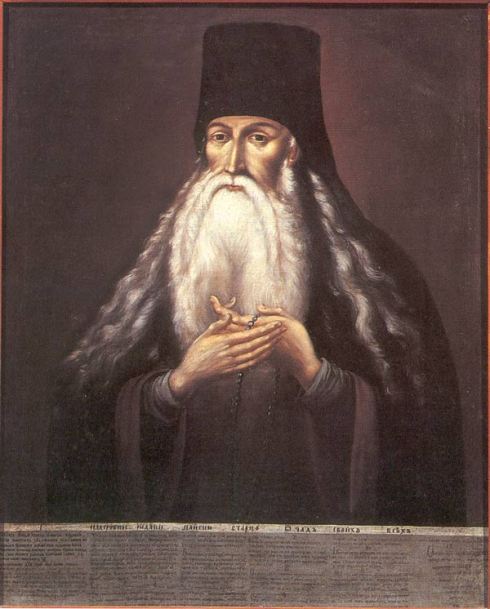
St. Paisius Velichkovsky in an early iconographic depiction.

Paisius Velichkovsky (1722-1794) was a monk, writer, translator, and spiritual guide who was born in what is now Ukraine, but who spent much of his life traveling through the Polish-Lithuanian Commonwealth and the Moldovian and Wallachian principalities of the Ottoman Empire, encountering many forms of monastic life and gathering spiritual and patristic writings. His spiritual disciples and his writings and translations would prove highly influential in the wider Orthodox world, providing the foundation for the Russian startets tradition made famous in Dostoevsky’s Elder Zosima. Paisius also wrote a fascinating and detailed autobiography of the first half or so of his life, from which the below is excerpted. The image of himself that he presents is of a young man who is pious and driven to deepen his spiritual practice, but also subject to numerous failings, ambiguous moral situations and decisions, and various difficulties and struggles. This particular story illustrates the quite intimate and human self-image that Paisius presents throughout his autobiography.

*

At the appropriate season the venerable superior of the hermitage, Father Dometij, assigned me the obedience of tending the hermitage’s vineyard, which was on level ground above the hermitage, at a distance of nearly one verst. He commanded me in no wise to dare eat any grapes until I had eaten at least a small piece of bread ; but provided I ate the bread, he gave me his permission and blessing to eat as many grapes as I wished , before or after the daily meal. He did this for two reasons, firstly because grapes were few in the country where I was born, and I had scarcely ever had the chance to taste them, and secondly, out of indulgence to my weakness, for he realized that I had a great desire to eat grapes and that I could not get my fill of them. Having received his command and blessing, then, after eating a bit of bread, I ate grapes often, both before and after the meal, choosing the one which grew sparsely, that is, not close together, for these were sweeter than the others. My passion for eating grapes came to such a pitch that I wanted no other food. When I went to the meal in the hermitage, I ate very little of anything else, but I ate grapes in abundance and with great relish. Having partaken of almost no other food that whole season until the harvest, I suffered no small illness of body, and my face grew thin as if from some disease. But after the harvest, when I ceased eating grapes and partook of the usual food with the brethren, I began to feel stronger day and night; and in a short time I was restored to my previous state of health.

Paisius Velichkovsky, The Life of Paisij Velyčkovs’kyj, translated by Jeffrey Featherstone (Cambridge, Mass.: Distributed by the Harvard University Press for the Ukrainian Research Institute of Harvard University, 1989), 82-83.

*

For further reading: John A. McGuckin, “The Life and Mission of St. Paisius Velichkovsky. 1722-1794: An Early Modern Master of the Orthodox Spiritual Life,” Spiritus 9, no. 2 (2009): 157–73.