An Early Modern Monastic Baking Disaster

Over the course of the eighteenth century Orthodox monasticism and spiritual life would undergo a considerable revival, beginning in various parts of the Ottoman Empire and spread north into the borderlands along the Dniester River, regions contested between the expanding Russian and Austrian Empires and the contracting Ottoman Empire and the Polish-Lithuanian Commonwealth, in addition to the maneuverings of local forces such as the Zaporozhian Cossacks and the various nobility of the Ottoman semi-autonomous principalities of Wallachia and Moldova. In time the currents of spiritual revival would make their way into Russia, contributing to the re-formation of the starets tradition in Russian monasticism and spiritual life, known to many readers in the West through Dosteovsky’s The Brothers Karamazov.

One of the key figures in this spiritual revival was St. Paisius Velichkovsky (20 December 1722 – 15 November 1794). Born in what is now Ukraine, Paisius made his way as a young man to various monastic settlements in Wallachia, followed by a stay at Mount Athos, then a return north to Moldavia at the invitation of Prince Gregory III, the Ottoman-appointed ruler of the principality. The story below comes from his sojourn at the monastery and hermitage of Trǎisteni in what is now Romania. He later moved to a monastery at the northern edge of Moldavia, in the region of Bucovina, only to see the Austrians invade and annex Bucovina to their expanding empire. Due to the hostility of the Catholic Austrian polity to Orthodoxy, Paisius and many of the brothers retreated to Ottoman lands, settling at the monastery of Neamţ, where Paisius would die in 1794. Before his death, Paisius would devote much of his time to translating the now beloved spiritual classic The Philokalia into Slavonic, allowing its transmission throughout the northern Orthodox world. He also helped to introduce the practice of the Jesus Prayer to the same Slavonic lands, as part of his emphasis on reinvigorating older forms of Orthodox spirituality. In addition to these efforts, he began, though did not complete, an autobiography, which describes his travels and labors. The 17th and 18th centuries of the Ottoman world saw an explosion of travel narratives, autobiographical accounts, and personal chronicles or diaries, of which this account is no doubt an example, as well as being part of a West Eurasian-wide increase in literacy and authorship. As the excerpt below makes clear, Paisius wished to relate the mundane in addition to the sublime, and in so doing, reveals precious details of everyday life- in this case, an attempt at bread baking gone very wrong!

For more on Paisius’ life and historical legacy, see John C. McGuckin, “The Life and Mission of St. Paisius Velichkovsky (1722-1794): An Early Modern Master of The Orthodox Spiritual Life,” in Spiritus 9.2. (2009).

A detail from the Gospel manuscript of Luke the Cypriot (active 1583-1625), who worked in various places in the Ottoman Empire before settling in Moscow, where this Gospel was completed.

When everyone had gone off to the forest, then, to do the aforementioned work, the superior called one of the brethren who was the most experienced of all in the baking of bread and ordered him to show me the procedure for baking bread; and he ordered me to bake the bread, that it might be ready for the meal. This brother showed me in detail the procedure: pouring water into the cauldron, he showed me the pans of flour and the jug of kvass. He told me, ‘After you have heated the water, pour it into the flour in the pans and begin to knead it; then pout all the kvass from the jug into the dough and knead it all together.’

Having said this, he went off to the brethren in the forest. But wretch that I was, after his departure I heated the water and poured in the flour, completely forgetting to add the kvass. When I began to knead it, there was too little water, and too much flour. Having no experience, I did not know that it was possible to heat more water and add it, but thinking that once the brother had measured out so much water and flour it was in no wise possible to add or take away from it, I labored with great toil to knead all the flour; and the dough became so hard that it was impossible to put my fingers in it. At a loss for what to do with all the remaining flour, I cut the dough in pieces with a knife and placed it on the table. Sprinkling flour upon it, I beat it with a piece of wood and thus scarcely managed to knead in all of the flour; and placing all the dough in the pans with the greatest of difficulty, I scarcely managed to set them on the oven, so that the dough might rise more quickly in the warmth.

I waited for quite a while, and then I lit the oven so that it might be ready, but after I had burnt a great quantity of wood, the dough had still not risen. I was grieved by this, not knowing why it would not rise, but remained hard and immovable like a rock. In the afternoon one of the brethren came from the forest, not the one who had shown me how to bake the bread, but another, sent by the superior to learn whether the bread was ready or not. He asked me, ‘Why is the bread still not ready?’ Answering him with a sigh, I told him that it still had not risen. He and I then took the pans off the oven and, feeling it with his hand, found that it had been kneaded as hard as rock. Learning the reason for this, he smiled and said,’ You ignoramus! When you saw that there was too little water you ought to have added more without hesitation, or else taken away some of the flour, and thus you wold have kneaded the dough as one needs do.’ Then he asked me, ‘Did you add kvass to this dough?’ What fear and shame came upon me when I heard this! I scarcely managed to answer that I had forgotten to add the kvass. But seeing that I was terrified, and being a sensible man, he began to console me with spiritual words: ‘Do not grieve over this,’ he said, ‘for it was not from contempt, but from your inexperience in this work that you have erred.’ He heated some water and pour it upon the dough, and he and I began to knead it, adding the kvass. With great difficulty we scarcely managed to knead it somewhat, though it was impossible to knead it thoroughly on account of its great hardness.

Then, having given me instructions what to to do, he went back to the forest. I waited a rather long time, and when I thought the dough had risen somewhat, I made it into loaves and placed them on the table. After sufficient time I built up the fire in the oven, and it grew so hot that it emitted sparks. I swept these up carefully and, allowing the oven to cool a little, though not as much as was necessary, I put the bread into it, thinking that it would bake well. But because of the oven’s great heat it turned black forthwith and began to burn, and it was burnt nearly two fingerbreadths from the top and bottom. At a loss for what to do, I fell into great despair, firstly because through my ignorance I had made such a mess of things in the bakery of the holy hermitage, and secondly because the holy fathers would not find anything to eat when they came back from the forest. Taking the bread, then, completely burnt, from the oven, I awaited with fear the arrival of the brethren. And when they returned from the forest and saw what I, wretch that I was, had done in my ignorance, what great fear and shame came upon me! Not knowing what to do, I fell down at their holy feet with tears and asked forgiveness. The father superior and all the brethren, imitating Christ’s mercy, forgave me. Cutting one of the loaves, they saw that it was in no wise fit to be eaten; and they boiled corn mush (mǎmǎligǎ) and made a meal of this. No more did they bid me to bake the bread. But once having endured this, I thereafter watched diligently how the bread was baked and, with God’s assistance, I learned to do this. I describe here how I suffered because of my inexperience in this matter for the sake of the brethren who come now to our community, that they may not be frightened because of their inexperience in this or a similar obedience. For through God’s help and their own fervor they will be able to gain experience in the obediences assigned them.

Paisius Velichkovsky, The Life of Paisij Velyčkos’kjy, trans. by J.M.E. Featherstone (Harvard: Harvard University Press, 1989), 70-72.

On True Spiritual Seclusion and Exercise

Bridging the gap between how we intuitively understand words and concepts and how people in the past, or people in the present but in quite different cultural-linguistic worlds from us, understood those same words and concepts is often a difficult task. In the text I’ve translated here from the great early-modern Ottoman Damascene mystical philosopher, poet, and traveler (to name but three of his occupations) ‘Abd al-Ghanī al-Nābulusī (1641-1731), we encounter both dissonances of meaning endemic to the gap between our time and his, as well as dissonances that ‘Abd al-Ghanī introduces. Easily one of the most fascinating and versatile thinkers of early modern Islam, ‘Abd al-Ghanī simultaneously defended the practices and concepts of Sufism, especially as embodied in the thought of Ibn ‘Arabī, while also frequently refashioning them and integrating them into a wider-ranging philosophy of Islam that embraced the rapidly changing world of early modernity, against the puritanical, ‘fundamentalist’ strains of Islam that fitfully circulated in the Ottoman world. In addition to defending the legal validity of smoking, coffee-drinking, dancing, musical performances, and other activities, ‘Abd al-Ghanī generally argued for a broad social ethic that rejected moralism and morality policing, instead encouraging positive, indeed tolerant social interactions across class and confessional lines. This is not to say that he advocated some sort of proto-liberalism or modernism: as is clear from the following text, ‘Abd al-Ghanī did not reject the practice of the sharī’a or traditional theological beliefs. But what he did with those beliefs and how he interpreted them in doctrine and practice could be quite surprising and even innovative (a term he would not have appreciated, I should note). His often bold textual moves can be quite jarring at times- as they no doubt were in some cases for people in his own day.

This text is the bulk of a letter ‘Abd al-Ghanī sent, in April of 1678, to one Mulla Aḥmad of Hayrabolu, in what is now the European portion of Turkey (it was evidently conveyed by friends of ‘Abd al-Ghanī, as the note at the end indicates). In it our author discusses ‘true’ and ‘metaphorical’ acts and states, in so doing reversing the ways in which we tend to speak now (though reflecting language C.S. Lewis used in some of his works): the really real seclusion (khalwat, a type of ascetic withdraw for spiritual purposes) takes place within the self and in relation to God and through Him the rest of the world; that of the body and in relation to physical society is merely ‘metaphorical,’ obtaining reality through its contact with the true practice of seclusion. And so on- ‘Abd al-Ghanī explains it pretty well, I think, though this English translation does not convey the word-play and subtlety of the Arabic original- always a problem in translation, especially in religious-philosophical language such as this. But so it goes- ‘Abd al-Ghanī would no doubt argue from such a state to the ultimately metaphorical nature of language, realized only through connection with the truly Real.

a_damascus_pottery_tile_ottoman_syria_17th_century_d5479930h

And I have heard regarding you, O brother, that you are firmly fixed in your religion, desiring conformity with the command and the prohibition, and I love you for that. And I love for you what I love for my own self: that you enter into the path of inner piety (ṭarīqat al-taqwā al-bāṭiniyya), so that the interior and exterior be made perfect for you. What I mean by ‘inner piety’ is your crossing from the outward ordinances to the knowable realities, so that you witness through the eye of spiritual perception that every motion out of the motions of canonical prayer and other than those from among the acts of worship possess a lordly sign (ishāra)  and merciful secrets. And every ordinance from the ordinances of the sharī’a has an application in the exterior and an application in the interior. The sharī’aic ordinance (ḥukm) is a body, while the divine wisdom (ḥikma) is the spirit of that body. Do not be content with the bodies apart from the spirits, and do not be distracted from the bodies by the spirits: rather, bring together the exterior and the interior.

And let my friend—God, exalted is He, give him peace—know that there is no recourse for that besides entering into sharī’aic seclusion (khalwat) and doing sharī’aic spiritual exercises. And I mean by ‘seclusion’ only your solitude in witnessing the true Doer apart from the metaphorical doer, then the witnessing of the true One Described, apart from the metaphorical one, then the witnessing of the true Existence, apart from the metaphorical existence. And persist in this witnessing so that the senses and the intellect are fully immersed. This is true spiritual seclusion. As for the metaphorical seclusion, it is that you enclose your body in a ḥalāl house and ḥalāl sustenance, and cut off your sight interiorly and exteriorly from all that is outside that house by negation or affirmation, until you find the true seclusion, then come out of the metaphorical seclusion.

Among that which brings you to this is your concern for and your paying attention to the books of the knowledge of Sufism, such as the books of Ibn ‘Arabī, Ibn Sab’īn, al-‘Afīf al-Tilimsānī, and the like of them—God hallow their spirits—after washing the spiritual sight of the dirt of rejection of any of them, so that the door of their luminescent secret is opened for the heart, and the reality of their stationing upon the stations of the Muhammadan sharī’a is unveiled for the heart. And it knows that they are knowledge of it in the most perfect sense, acting according to it without innovation (bid’a) in the exterior or interior. And someone is not veiled from them through unknowledgeable rejection of their path, unreflexively being against them due to uncritical imitation [of anti-Sufi views], or from being fearful in regards to others due to his not understanding their doctrine, hiding in his [public] disavowal with faith in their doctrine without thinking evil of them—that is more beneficial for him, if such a person is not an enemy of that which he does not know. Junayd, God be pleased with him, said: ‘Faith (al-īmān) in the doctrine of this group is wilāya.’ Meaning, with neither understanding nor critical objection. For every entity among the learned has technical vocabulary which they use but others do not know, so accusing them of error without awareness of their technical vocabulary is itself a mistake. And there is a people who understand the doctrine of Sufism in accordance with the Book and Sunna, even if the exterior of the.doctrine appears to be in opposition. Its people always exist—to God belongs praise in every place and time! The one who licitly seeks them, finds them. ‘Licit seeking’ is sincere devotion, trust in God, thinking evil of the lower self, and the non-existence of thinking evil of others, whoever it may be, and submission to God in every place of His judgement and His decree, good and ill. As for the practitioner of innovationist seeking, he is not benefited by anyone he meets, even a prophet from among the prophets, upon them be peace.

And I mean by ‘exercise’ (riyāḍa) whenever I mention it, the directing of the soul towards the attaining of the realities and their habituation in every state, little by little. And that is by attachment to the clear Truth (al-ḥaqq), then by being characterized by it, then by ultimate realization—that is real spiritual exercise. As for metaphorical bodily exercise by the limiting of the eating of food and the drinking of water, as he—peace be upon him—said: ‘The sufficiency of the son of Adam are morsels which suffice his loins,’ so it is an excercise seeking other than itself, not for its own sake. It is constituted in the whole and is an aid for the fulfillment of the spiritual exercise, and is what does not go to excess and so lead to corrupt imaginings, so becoming a harmful interdicted thing—for this reason the jurists discuss it in their books.

So I have explicated for you seclusion and its conditions, real and metaphorical, and its like, exercise, but we hastened the matter due to the closeness of the travel of the brothers to you. God guide us and you on a straight path, and upright religion, in every moment, to the hour of death.

‘Abd al-Ghanī al-Nābulusī, Risāla 6, in Wasā’il al-taḥqīq wa rasā’il al-tawfīq, edited by Samer Akkach, in Letters of Sufi Scholar (Leiden: Brill, 2010), 116-119. Translation by Jonathan P. Allen, 2014, no rights reserved.

Roses for Kerā Khātūn

Few Sufis in history have achieved as much renown as Jalāl al-Dīn Rūmī (1207-1273), also widely known as simply Mawlānā, ‘our master.’ Of several hagiographical texts dealing with the life of Rūmī, the most expansive and best known is Manāqib al-‘ārifīn by Shams al-Dīn Aḥmad-e Aflākī, written in the early 1300s, decades after Rūmī’s death. In addition to Rūmī’s life, Aflākī includes the lives of several other saintly figures associated with Rūmī, drawing upon what seems to have been a vast reservoir of stories and anecdotes available to him. The resulting text, while imbued with many of the conventions of Sufi hagiography, also contains glimpses into everyday life in 13th century Konya. Formerly the center of the Seljuk Empire, Konya was by the lifetime of Rūmī under the rule of the Mongol Ilkhanids, albeit as a somewhat peripheral, frontier-like province. As had been the case under the Seljuks, Anatolia continued to be a place of cross-cultural interaction and struggle, and while increasingly politically decentralized and fragmented, host to both outstanding scholars and to networks of merchants and traders. Muslims may have been the majority population by Rūmī’s time, but members of various Christian confessions were still sizable and probably made up the majority in some places.

In the story below, in addition to the argument for the exalted nature of Mawlānā’s spiritual state, we get a glimpse of the market culture of Konya, and its possible ties to distant places. We also see some of the possibilities in the life of a woman in this period; the account is, not insignificantly, attributed to a woman, Mawlānā’s wife. Her maidservant acts as her representative in the market, unsurprising for a woman of exalted social class in this period. The account is also shot through with a rich sensuality and aesthetic sensibility, summoning for us not just sights and sounds of medieval Konya, but even smell- which is here bound up with the memory of sanctity, activated through the long-lasting lingering of the beautiful odor of the miraculous roses: memory that must be guarded lest it be misused, but, in the right noses, is both spiritually and sensually pleasing.

A rose by the Ottoman artist Abdullah Bukharī, c. 1733.

It is also transmitted that Mowlānā’s wife, Kerā Khātūn- God have mercy on her- who was a second [Virgin] Mary with regard to her unsullied life and the purity of her honor, related: ‘One day in the depths of winter Mowlānā was seated in seclusion with Shams-e Tabrīzī, and Mowlānā was leaning on Shams al-Dīn’s knee. I had placed my ear against a crack in the door in their direction to hear the secrets they were saying and to learn what was going on between them. Suddenly I beheld the wall of the house open and six awesome men of the invisible realm came in. They said salām, did obeisance, and placed a bouquet of roses before Mowlānā. And they sat there in complete concentration without uttering a single word, until it was close to the time of the midday prayers. Mowlānā indicated to Shams al-Dīn: “Let us perform the prayers. You act as prayer leader.” Shams al-Dīn said: “No one else can act as prayer leader when you are present.”

Mowlānā led the prayers and when the prayers were over, the six esteemed individuals, having paid their respects, rose and went out again through the wall. Due to this awesomeness I fainted. When I recovered my senses, I saw that Mowlānā had come outside and he gave me the bouquet of roses, saying: “Look after this!”

I sent a few petals of this rose to the shop of the perfume sellers to ask: “We have never seen this kind of rose before. Where does this rose come from and what is its name?” All the perfume sellers were amazed at the freshness, color, and fragrance of the rose, saying: “In the depths of winter where has such a wondrous rose come from?”

As it happened, there was a reputable gentleman in that company by the name of Sharaf al-Dīn al-Hendī who was always going to India on business and bringing back strange and wondrous merchandise. When they showed him the roses, he said: “This is the Indian rose. It grows particularly in that country in the area of Ceylon. That being the case, what is it doing in the clime of Rūm? I must find out the circumstances of how this rarity came to be in Rūm.”

The maidservant of Kerā Khātūn took the petals and, returning to the house, reported what had happened. Kerā Khātūn’s amazement increased a thousandfold. Suddenly Mowlānā came in and said: “Kerā, keep this bouquet of roses hidden and do not show it to any outsider. Concealed persons from the sanctuary of generosity and the caretaker of the delightful garden of Eram, who are the Pivots of India, have brought this for you as a gift that it may convey vigor the palate of your soul and give pleasure to your body’s eye. By God, by God, look after it well lest the evil eye afflict it.’

And it is said that Kerā Khātūn kept these petals until her final breath. But it happened that she gave a few petals from the bouquet to Gorjī Khātūn, the wife of the sultan, and this she did with Mowlānā’s permission. Whenever someone suffered pain in the eye, once a petal was rubbed on it he would be cured. The color and fragrance of these roses never underwent change thanks to the blessing of those esteemed persons whose bosom was perfumed with musk.

Shams al-Dīn Aḥmad-e Aflākī, Manāqib al-‘ārifīn, trans. by John O’Kane, 67-68

A basket of rose petals and bottles of rosewater, Fes, 2008.

Christmas on the Mughan Steppe, 1736

The first few decades of the eighteenth century were highly fraught ones for Safavid Persia. One of the handful of eyewitnesses to some of these events was one Catholicos Abraham of Crete, who found himself caught up in the Persian resurgence under Nādir Shāh Afshār. Nādir, of Turkoman background, had risen to prominence in the service of the presumptive Safavid heir Ṭahmāsp in the aftermath of the Afghan invasions earlier in the century. Nādir quickly proved himself an apt and ruthless commander- Abraham calls him a ‘second Alexander’- and soon deposed Ṭahmāsp, enthroned Ṭahmāsp’s son and set himself up as regent. He then resumed an already existing struggle against the Ottomans for control of what is now northwest Iran, Armenia, and Azerbaijan, which is where Abraham first encountered him. By Abraham’s account, Nādir was extremely courteous and respectful of the Armenian ecclesial leader and of Armenian interests generally (though not always); Abraham relates Nādir’s pious visit (using the Arabic loan zīyāret to describe the visit) to the holy Armenian see of Ējmiatsin.

In the waning days of 1735 Nādir summoned the notables of his domain to assemble on the Mughan Steppe near the confluence of the Kura and Aras Rivers, a region that lies in the modern nation of Azerbaijan. In the course of this long encampment, during which the elderly Abraham was forced to cope with cramped living quarters, snow and rain, and distance from home, Nādir was ‘voluntarily’ acclaimed as Shāh by the assembled notables and military men. The following account takes place in the days before Nādir’s arrival at the assembly; it describes the fortifications set up to protect the camp, and the rather somber, but ecumenical, Epiphany/Christmas celebration (both the Nativity and the Baptism are celebrated) in the Armenian quarter of the camp. As is the case throughout Abraham’s chronicle, Arabic, Persian, and Turkish words and titles are used extensively, reflecting the degree of inter-cultural interaction in contemporary Armenian life generally. The presence of Armenian Muslims is also notable, though not particularly surprising in light of the many interactions seen elsewhere in the chronicle.

Leaf from Ms. Ludwig II 7: Mesrop of Khizan (Armenian, active 1605 - 1651). Isfahan, Persia, 1615. Tempera on glazed paper
The Baptism of Christ. Leaf from Ms. Ludwig II 7: Mesrop of Khizan (Armenian, active 1605 – 1651). Isfahan, Persia, 1615. Tempera on glazed paper.

The deputy of the Great Khan, who supervised and kept watch over all the affairs of the troops in the camp, that is the nasaqçıbaşı ‘Abd ol-Ḥasan Beg, lodged us somewhat to the side of the camp, in cabins made of reeds. Over 500 cabins were prepared on the north bank of the Arax. The day of the Eve of Epiphany we went on an outing on horseback and saw the place were the Arax and the Kura meet. There were two bridges there: One over the Arax before the location of the confluence, and the other, over the Kura, after the confluence of the two rivers. There was a fortification built over small boats, which consisted of wooden launches that were placed on the water beside each other over the span of the river. Thick ropes tied the launches to each other from one end to the other. The ends of the ropes were attached on the top to chains and on the bottom with ropes which resembled the thick cables of the mooring of galleons. Thick logs and boards, attached by nails covered the launches so that people could cross the river. On both sides of the bridge across the Kura River, however, edifices and towers were constructed which resembled forts. They had installed artillery pieces in these forts so that the enemy could not attack unexpectedly and damage the bridge. In addition guards were stationed to protect the bridge day and night…

After visiting all of this, we returned to our quarters, which were an hour’s distance from the confluence of the Arax and the Kura Rivers, for the bridge across the Arax was located within the area were the army was stationed, while the bridge across the Kura was below the camp and we were stationed in the upper part of the camp.

Next day, on a Tuesday, we pitched a large tent, which we had brought from Holy Ējmiatsin and which resembled a church, having a cupola-like top and decorated with drawings, crosses and flowers. I ordered that all born to the faith of the Illuminator to gather there and those [Armenian soldiers] who were in the camp to come to my tent the next day [Christmas Day]. On Christmas Day they all came to my tent and we celebrated the feast of the birthday of Christ, Our Lord. We did so without an altar or liturgy, without any spiritual satisfaction, just like the ancient Israelites who hung their harps on willows. Thus with sad faces and broken hearts out people against my will dressed and taking the few church vessels and religious utensils we had brought with us, which were indispensable for a religious procession, I, together with priests, deacons, and lectors, dressed in robes, dressed in robes and carrying lit candles descended from the tent to the Arax.

There we performed the ceremony of the preparation of holy water by pouring the holy meṛon in the waters of the Arax. The kalantar of Erevan, Melikjan, Melik Hakobjan, Melik Mkrtum, Melik Ēgēn of Dizak were present. At my command he removed the cross from the water. In addition [there were] the kadḳodās of Erevan and the Ararat province, the Armenians in the army, the āqā of Erevan, and distinguished people, such as the sheikh ul-Islam, the qāẓī, and the Khan’s yüz-başı; altogether more than 300 Armenians and Muslims. The amazing thing was that the Persians took the water mixed with the meṛon and anointed their faces with it. I then left them and they went to their own places. We returned to our tent. There were some distinguished people with us whom we had invited to dine with us.

Patmut’iwn of Kat’oghikos Abraham Kretats’i, translated by George A. Bournoutian (Costa Mesa, California: Mazda Publishers, 1999), 57-59.

Popular Unrest, Elite Machinations, and Ottoman Political Processes in 17th Century Damascus

Bribery, looting, civil unrest; public meetings and unresponsive government officials; tangled lines of communication, competing stories: these things are the stuff of many a contemporary political struggle, but they are hardly unique to the modern world, or any period, probably. As the story below reveals, these ‘key words’ could be quite apt in describing provincial Ottoman power struggles and governance. This particular story, of a ‘unjust’ Ottoman governor of Syria and the repercussions of his apparent ‘crossing the line’ in and around Damascus, comes from the ‘notebook’ of Ismā’il al-Maḥāsinī, briefly described in the post preceding this one. As a member of the ‘ulama, the body of learned, elite men who constituted one of the key political and economic power groupings of the Damascene body politic, Ismā’il was not a disinterested observer, unsurprisingly. In this story the ‘ulama are seen uniting around the qadi, the Ottoman-appointed judge (and one of the most respected and powerful, though by no means unchallengeable, public figures in any Ottoman city); alongside the ‘resident’ military class (here probably one of the two groupings of janissaries stationed in Damascus) they support the qadi in his attempt to bring the rapacious governor and his lieutenant to bay.

Yet there are other political groupings as well- significantly, the heads of the craft guilds, presumably supported by the larger body of craftsmen, rally against the governor, going so far as to participate in (and perhaps initiate) a general strike across Damascus, shutting down their shops and joining in the chorus of discontent with the governor. In other words, it was not just the ‘ayān, the so-called ‘urban notables,’ who participated in politics. Others could have a voice (indeed, the irregular soldiery should also be seen as political participants).

Things proceed from the strike and ‘public meeting,’ growing more complicated as the governor’s faction- which in this story seems to consist solely of a few lackeys and a mob of irregular soldiery- tries to ‘control the narrative’ at the seat of imperial power in Edirne and Constantinople, against efforts by the qadi and others to do the same. In Ismā’il’s somewhat breathless and sometimes hard to follow account things eventually work out: justice is eventually had through the intervention of the imperial center, or so it would seem from the somewhat abbreviated conclusions (this is, after all, someone’s personal diary, albeit probably with a semi-public intention). In read it, we should keep in mind that it represents one particular perspective- the governor would no doubt have had a different view of things, as would his followers, such as they may have been (and he may indeed have been isolated- a crucial factor in his downfall).

In my translation I have tried to retain as much of the tone of the original as possible. I ran up against some difficulties, noted in brackets, due to my limited knowledge of colloquial Syrian in the period; there are also what appear to be either errors in the original text or in the editing of the printed text. Words of Turkish origin I have presented in their Turkish rendering for clarity.

Stained-Glass Window, 17th century [Egypt or Syria]. (93.26.3,4) In Heilbrunn Timeline of Art History. New York: The Metropolitan Museum of Art.
Stained-glass window, 17th century [Egypt or Syria]. (93.26.3,4) In Heilbrunn Timeline of Art History. New York: The Metropolitan Museum of Art.

Praise be to God. When Ḥusayn Pasha Yek Shasham was Pasha [governor] of Syria [al-Shām—here also simply Damascus] in the middle of the year 1085 [1674], he had a katkhudā [steward] named Ḥasan Agha who had previously been kutkhudā for Ibn ‘Abd al-Raḥīm Efendi, previously Shaykh al-Islām. Ḥusayn was ordered to accompany the pilgrimage, [but before leaving] and he carried out the utmost oppression upon the subjects (ra’īya) and the villages, and he took from the heads of the craft-guilds (arbāb al-ḥiraf) many things which would have been worth a great deal had they been sold on the market, and he left Syria and did not pay anyone anything. He left in his place the aforementioned Ḥasan Agha. He undertook oppression, transgressions, the reception of bribes and refused to listen to the command of the Qāḍī Shahlā ‘Abd al-Bāqī Efendi. And he had in his service a man whom the pasha used to send as a mutasalim [a deputy of the governor, and often a tax-collector], named Aḥmad Agha. The aforementioned Ḥasan sent him to around five or six households [? jihāz] in the eyalet [province] of al-Shām, and he killed unjustly, plundered, and the community was ashamed, he not fearing God at all. When the pasha returned, this Ḥasan kept on with what he had been doing, and the pasha likewise, as he no longer listened to the qadi’s commands and prohibitions. And things become dire for the Muslims to the extent that the pasha had saricas and sekbans [locally-raised irregular cavalry and infantry] who would interfere with the property of the people of al-Shām and the villages, and with their very lives, obliterating public safety. Then they went so far as to begin meddling with the sacrosanct households of the Muslims—and the people could not tolerate that. So, on Friday, Rabī’ al-Ākhir 4, 1086 [June 28, 1675], the people of the city gathered together, shut down their shops, and came to the qadi in order to complain about their condition. The ‘ulama and the soldiers (al-‘askar) also gathered together in the place of the court, and the qadi sent a contingent drawn from the ‘ulama and the soldiers to the pasha, who reported on behalf of the people the injustice against the people and the injustice of Ḥasan and [called for] his dismissal. But nothing came of their visit to quench the burning thirst of the Muslims [i.e. no remedy to the oppression was forthcoming].

So they sought from the qadi, and the ‘ulama and soldiers who were present, a petition to the exalted Sultan with all the relevant information contained therein. So the qadi, with the ‘ulama and soldiers, wrote the petition and handed it over to Muḥammad Agha ibn ‘Abdī Agha, previously a regimental commander, for him to take it to the Threshold of the sublime Sultan— God grant him victory! So he took the two of them [sic—two separate petitions?] and went out from al-Shām covertly, at night, on the night of Monday, Rabī’ II 7, 1086 [July 1, 1675]—may God make the Muslims heard through him so as to gladden them, and repel from us and from them what afflicts us and them, amen.

Then the pasha sent the aforementioned Katkhudā Ḥasan to the Sultan also in order to defend himself—may God rather defend those who believe! Ḥasan Agha went via postal-horse and overtook Muḥammad Agha in reaching the place of the exalted Sultanic abode, Edirne, by many days. And by embellishing his speech he gave off impressions in order to derive benefit. He sent out a report the pasha. He went out with it on al-Jumādī I 7. He came to Istanbul and it just so happened through the divine decree that He beheld the matter of the judgment of al-Shām. And he came to Mīrzā Muḥammad Efendi, and he took the report and went with it to al-Shām, reaching the city at noon on Saturday, Jumādī II 9. And Mīrzā Muḥammad Efendi sent a letter to Aḥmad Efendi Bakrīzāde delegating him for duty, so he sat for judgment in a courtyard in the place of the court, and on Sunday in the Nūriyye. On this day the pasha summoned the aforementioned qadi ‘Abd al-Baqi and all of the ‘ulama to the Ṣālihiya, [then] to the palace of Ḥusayn Efendi ibn Qarnaq, and he showered the qadi and the rest with great hospitality and kindness. After the hospitable reception was over, he sent the qadi a horse as a gift.

As for Muḥammad Agha, report came from him to al-Shām that that he entered Edirne on Jumādiī I 12, and the cause of his delayed coming was that he went to Edirne from al-Shām upon a different route from Ḥasan Agha, and that he was riding his own mount, not upon a postal-horse.

And ‘Abd al-Bāqī travelled from al-Shām on Monday, Rajab 2, 1086. And on the night of that Tuesday an agha, named Ḥasan Agha, a qapuju [warden-officer] of the Sublime Porte, entered al-Shām, in order to adjudicate regarding the truth of what the qadi and the people of al-Shām reported, and the truth of the words of Ḥasan Agha and his pasha. Then our lord Mīrzā Muḥammad Efendi entered al-Shām on Monday, Rajab 16 of the aforementioned year [October 6, 1675]. On the second day [after his arrival] the notables (‘ayān) of the land from among the ‘ulama and soldiers gathered together in the place of the court, and the Qapuju Ḥasan Agha came and read the sultanic order which he had brought, and its gist was that the petition of the Qadi of al-Shām and of the people present with him had risen to the Sublime Porte, and his complaint had arrived, they mentioning that Ḥusayn Agha took many things from them. ‘So We sent Ḥasan Agha so that for everyone from whom something had been unjustly taken he might restore what had been taken from him, after establishing the matter in accordance with the Shari’a, in the presence of the qadi.’ He specified that the qadi would listen to the claim, and specified that the commanding and the realization of the supplication be the affair of the Sultan—God grant him victory! And the people came out, as everyone who had a complaint came to the place of the exalted Shari’a.

Then Ḥusayn Agha assigned Kutkhudā Ḥasan Agha to listen to the complaints of the supplicants from among the assembly. And they laid charge [upon him and the pasha] with some eight of the specific points written out in the petition of the qadi and the people. So Ḥasan Agha [the qapuju] acknowledged that and the qadi wrote his report and put in six items of authorized evidence, and the veracity of the petition of ‘Abd al-Bāqī and the people of the land present was made manifest. The qapuju sent the authorized evidence along with the written report of the qadi to the Sublime Porte on Ramaḍān 2, 1086; he himself left al-Shām on Ramaḍān 27. Then on the second of Shuwwal [December 12, 1675] Ḥusayn Agha turned away from al-Shām, in the company of our lord Vezier Ibrahīm Pasha, who had previously governed al-Shām distant from Ikrīd [this last line’s meaning is unclear to me].

Ismā’il Maḥāsinī, Kunnāsh Ismā’il Maḥāsinī, ed. Ṣalāḥ al-Dīn Munjad (Beirut: Dār al-Kitāb al-Jadīd, 1965), 111-113.  

On Service to One’s Shaykh

The below brief text is excerpted from a short Ottoman Turkish manual of Sufism by Mahmut Hüdayı, an important shaykh, and indeed early organizer, of the Celvetiyye ṭarīqa, the adherents of which mostly lived in the Anatolian and Rumelian parts of the Ottoman domains. Much of Mahmut Hüdayı’s output was in Arabic, but a substantial number were in Ottoman Turkish- not quite a colloquial register, but more likely to be read and understood by a wider number of people in Anatolia and Rumelia.

This passage is emblematic of one of the prevailing themes in the work from which it is excerpted: the importance of having a shaykh (in this context, a spiritual master/instructor) and being constant in honoring and obeying him. While such sentiments were hardly new in Sufism in the sixteenth century, there were also a seemingly increasing number of people who contested, explicitly or implicitly, the authority and knowledge of living shaykhs. By the eighteenth century it is easy to find many people practicing what was essentially a ‘privatized’ mystical Islam, with little need for a shaykh or regular communal life. Such a possibility is clearly not in view for Mahmut Hüdayı, however- quite the opposite, as is clear from the following passage.

If the shaykh enjoins as a duty any service (khidmet, mod. Turkish hizmet), [the disciple] ought to carry that service out, without delay, without adding any other business to it, without asking for explanation of cause or detail, and without stopping. It is related about a shaykh that he asked one of his disciples: ‘If your shaykh sent you off to do some service, and on the way you passed by a mosque in which they were performing congregational ritual prayers, what would you do?’

The disciple answered, ‘First, I would carry out that service, then I would perform the ritual prayers.’ The shayhk commended his answer. The intended moral from this [antecdote] is the bestowal of great care in service [to one’s shaykh]; it is not, God forbid, the disparagement of ritual prayer!

Mahmut Hüdayı, 1543 or 1544-1628, Ṭarīqat-nāme, Princeton Islamic Manuscripts, New Series no. 307, fol. 128-129.

A View of Constantinople, 1756

The following effusive description of Ottoman Constantinople/Istanbul is from the pen of Timothy Gabashvili, a Georgian cleric who embarked, in the mid 18th century, on a long journey across the Ottoman realms visiting sacred sites, various Orthodox communities, and other sights and places along the way, all of which he would later describe in his Georgian-language record of his pilgrimage. Timothy’s perspective is a somewhat unique one: Georgia in the mid 18th century was still within the Ottoman orbit, but was being aggressively courted by an expansive Russian empire. Timothy himself had previously visited Moscow and the new city of St. Petersburg. Yet in much of his narrative his treatment of the Ottomans is remarkably positive- all of his interactions with Ottoman officials were amiable and productive, and the relationships he managed to forge enabled the success of his pilgrimage. In a relatively few short years- unbeknownst to Timothy or anyone else- the Ottoman world would change a great deal, and a pilgrimage of this sort, and the relationships that made it possible, would be forever lost. In 1756, however, a pious Georgian pilgrim could still feast and drink with Muslim Ottoman notables, and wax poetic in praise of the the Ottoman incarnation of the City of cities.

Panorama of Istanbul, Ottoman, late 18th – early 19th century, 58 x 27.1 cm, SHM 12449 – İ.1285 / From the Sadberk Hanım Museum, Istanbul

*

Now, I’ll say something about the city of Constantinople. The lure of the city’s radiance has spread its beauty to distant parts of the world and even the capitals, because in no other place can one find Asia and Europe together. Among them, running down from the Black Sea, there flows a narrow sea like a river. It runs, with spouts of foam. Constantinople is founded on it and on the mountains by the hand of Sabaoth. The mountains are lavishly covered with spruce trees and Lebanese cypresses. The city has been built on both sides of the sea that flows in a narrow stream. The structure of the walls, the towers and the battlements are splendidly coloured. The windows of the palaces sparkling in different ways, resembled Eden.

Some of the palaces, vaults and bazaars of the city were covered with lead, the gilded roofs of the palaces and springs shone like the sun shining on the city, and the colour of other buildings in the city was scorched clay, or purple, a hue also like the sunset. The ships in the city stood erect like the trunks of poplar trees. Among the groves of selvinu, ghaji, and cypress trees, there was a glimpse of the royal palaces, and the buildings were veiled in the forest of pine and spruce groves. This capital seemed to me like the brightest among the stars, like a rose among the flowers of Eden, like a jacinth among the precious emeralds, like the rainbow in the clouds, and Augustus Caeser among the kings. I found it very difficult and sad to be leaving Constantinople, as I, who had come here after a great many sufferings and hardships, would never see it again. My eyes and my mind competed in emotion when viewing this marvelous city

Timothy Gabashvili, Pilgrimage to Mount Athos, Constantinople, and Jerusalem, 1755-1759, trans. by Mzia Ebanoidze and John Wilkinson


To Drive Away the Vampires: Music from the Balkans

Below is a wonderful sampler of music, via Baltimore-based Canary Records, from across the Balkans, culled from albums produced from the 1930s to the 1970s, so ‘modern,’ but not that far removed from the pre-radio, pre-recording, pre-nationalist past. One of the enduring legacies of the Ottoman Empire is the vast, diverse, yet inter-related soundscape of music practiced by the various ethnic, religious, and linguistic groups that dwelt in and moved across the Ottoman realms, carrying and transmitting and sharing their musical traditions, to the extent that no musical tradition remained sealed off from others. One can hear that multiplicity and interconnectedness in this lovely sampler; another good example, drawn from recent field recordings, is the album Mountains of Tongues, an assembly of contemporary ‘traditional’ music from the Caucuses, a region that, like the Ottoman Empire (which indeed included parts of the Caucuses) was and is a tapestry of traditions and identities.

Battleground National Cemetery

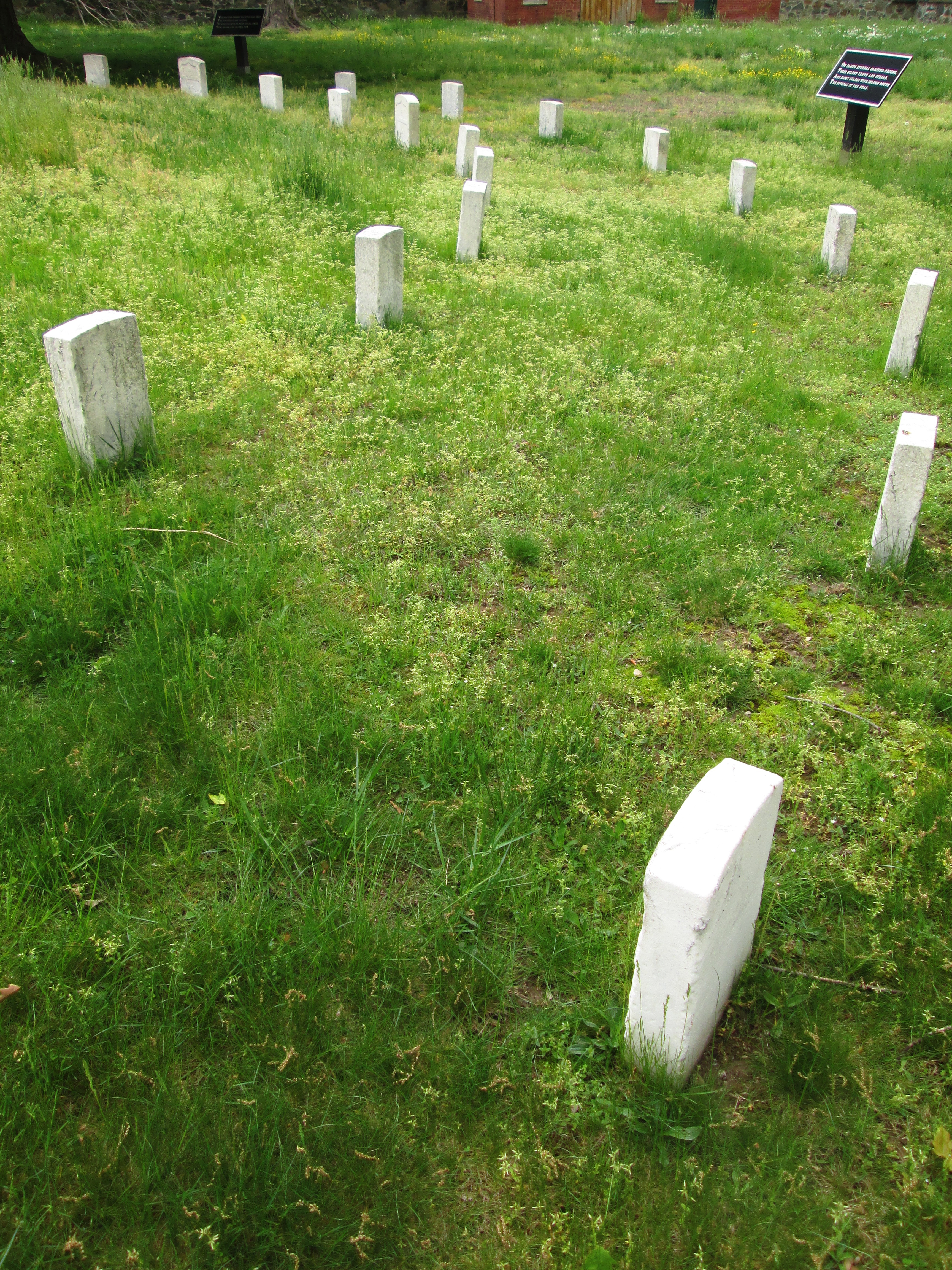
One of the smallest American national cemeteries, this tiny cemetery is wedged between residential developments off of Georgia Avenue in the far northeast corner of the District of Columbia. The soldiers (mostly soldiers anyway) interred there were, for the most part, killed during the battle of Fort Stevens, a half mile or so distant, in 1864. Today the cemetery is an odd little oasis of green, the grass tall, the trees rambling, a rather poignant setting for the bits of nationalist piety, half bellicose, half sorrowful, that pepper the little block of green.

IMG_0573


IMG_0571


IMG_0575


IMG_0576

Fragments. Mississippi. The Eschaton.

i.

Buried under twenty feet of pine mould,
Magnolia cones, and red soil washed out,
Sins of a dozen generations, decomposed,
All these tendriled roots reach into our living flesh.
We are still the scattered bones and blood,
Slave and free. Marbled pillar and rotting red rock pile
Mark their places, where our dark roots reach in,
And draw up our half-hidden present.
The old chains, which once we forged,
Rust close, next dissolve
Into the tannined water over red clay and white sand,
Black depths and inner sanctums,
The crack of bone, and the body in prayer.

ii.

At a certain age
The hearts of loblollies and longleafs go dark,
And rot. The fire takes them. Ash and smoke.
The remnants, transmuted, filter slow
Into the lost seas, the departed mountains, the wasted
Pasts that lapped up our blood, and the blood we spilled.
All trajectories merge.
Yet, things grow more fertile,
Marked by flame and flood—the
Mercy may overtake the Wrath, but both
Remain, this the great dialectic. None
Of us escape, only pass through.
Then—seeds open, and sing.

iii.

Open your mouth, taste
The old life, the new death hanging
After that morning’s rain, bearing a bit
Of those dead uplands to the unending sea. Know.
Other things happen, though. Those saplings’
Taproots run terribly deep. So you too
Must burrow, must find the far down place
Rooted in the life-giving decay and parted hills,
All the way down,
To the first Place,
The no-place. Uncreated.
Have your feet there, and the Fire will not consume you.
Only singe.
Then—
Return, rebirth, and the resurrection of the dead.