O Tempora

Two articles with contents one would be hard pressed to make up, and both of which I could image being the content of Wendell Berry’s nightmares.

First, the editors of the Oxford Junior Dictionary decided to take out lots of old, good, pleasant-sounding words having to do with God, the countryside, and history, and replace them with horrible nasty words having to do with technology, pop culture, and colourless academic/policy hack speak. One need hardly look further for a snapshot of the destructiveness of post-industrial capitalist culture, really.

Some of the words removed: mistletoe, goblin, altar, bishop, monastery, monk, psalm, saint, sin, duchess, duke, decade, heron, kingfisher, lark, ox, oyster, thrush, weasel, apricot, ash, county, cowslip, fern, hazelnut, primrose, sheaf, walnut, willow.

And some included: Blog, voicemail, attachment, database, cut and paste, celebrity, creep, citizenship, EU, brainy, boisterous, bungee jumping, committee, compulsory, biodegradable, dyslexic, food chain, trapezium, alliteration, curriculum, classify, block graph.

Of course, I doubt very much the editors have any particular animosity towards God or saint or trees or countryside. Rather, for them, those things, being impractical, have no place in a child’s vocabulary. They defend the removals by arguing that Britain is now a multifaith, multiculture society- but then why not include words having to do with other faiths and cultures? And why remove the countryside words? No, rather, what they meant is Britain is a society in which either no goes to church or into the countrside, or rather, they ought not, and they certainly aren’t to be expected to read or write about it.

Second, it turns out that big government ‘conservatism’ (what are we conserving, again? Oh, right, big capital!) is a jolly fine idea, really, writes Bill Kristol. Small isn’t beautiful– it’s not very practical nor very likely, not unlike those outdated words the wise Oxford editors jettisoned.  Of course, not just any big-government is meant- no, while silly ‘liberals’ want to repair roads and bridges and schools, what we need are bigger and better bombs and bullets. Why bother about building bridges when you could be blowing up bridges in other people’s countries? Yes, Mr Kristol tells us, government should be limited- limited to war, destroying domestic freedom, and saving corporate capitalism.

Strangeness in the Stacks, And On Seeing (And Refusing to Hate)

This afternoon I made a quick run from my office to the library to retrieve a couple books on early Islamic historiography. Normally this sort of book retrival is as uneventful as one would probably imagine it to be. Not this afternoon. I come to the correct section- the DS38s- an area I’ve been in and out of this semester, and remove a volume. I notice that a piece of paper is stuck in it, which I remove (one time I found five dollars in a library book and often hope I will find some more, though so far no more luck, though I did find 200 dirhams on a dirt road outside of Fes in March…). I open the folded paper, and am greeted with the words (I promise you none of this is made up): ‘Attention Muslim Visitors to America! Here are rules for getting along in America.’

The paper then proceeds to list, um, rules for Muslims in America, which include such enlightening things as: ‘You do not have the right to enslave anyone at any time for any reason [shoot!]. This is going on in Mauritania, in Darfur, in Sudan [somewhere between Darfur and Mauritania, right?] and elsewhere in the Moslem world. Muslims must approve, since they don’t even protest against it.’

‘You do not have the right to riot or pillage…’

‘You come here to expecting to practice your religion, yet your home country persecutes other religions. You should be grateful to this country instead of hostile. Until your country [the Moslem one, I guess- that really big one you know] cleans its own house, it has no business criticizing America for anything. Respect other people’s rights in every way or leave.’

Etc. After recovering from the shock that we’re apparently not allowed to riot and pillage, and therefore having to immediately adjust my evening plans, I looked around in the DS38s, and found more of these fliers stuck in books. In one book (a translations of the early Islamic historian al-Tabari’s work on the ‘Abbasids) there were two copies (everyone knows terrorists are really into those crazy cat ‘Abbasid caliphs). However, there were no fliers in books outside of the DS38s, which was perhaps the most bizarre part of it. I didn’t think at the time to look in the section of the stacks with the books on Islamic theology, jurisprudence, etc., so I’ve no idea if these fliers were more widely distributed. Why the DS38s- did our zealous defender of America suppose those horrid foreign Muslims mainly read historiographical work? One can only speculate. At any rate, it was an all around strange experience, not least for the reminder that my particular field of study- medieval Islam and Eastern Christianity- has all sorts of very immediate inroads in everyday life, even here in East Tennessee. It was also a reminder- not that one is needed- that for many people in this country, their only image of Muslims is the violent fundamentalist, the crazy bearded man in a cave, the zealot gunman in Mumbai, or some vague (heavily bearded and turbaned) figure flitting about a madrasa. This is the image they project on all Muslims, everywhere, including those who live and work and worship here.

I don’t know what it’s like for Muslim immigrants here in East Tennessee; a few weeks ago I talked with a young man from Bulgaria who had been working in Pigeon Forge on a temporary visa. While not Muslim, he had an accent and looked ‘Eastern’; he said that occasionally people would come in and speak in their most affected local accent and in general try to yank his chain, knowing that English was his second language. I had a roommate earlier in the year who was working at a JiffyLube out in North Knoxville; he is from Maine and sounds like it. His co-workers constantly harrased him over his origins, until he finally left the place. Feelings towards Latinos here seem to be strained at the least, which is strange since there are so few Latinos around. So I wonder- with just the evidence of my library propogandist to go on- if the same sentiments flow towards people from the Islamic world. Probably, if I had to guess. And let’s be clear- the sentiments that lay behind my anonymous writer are at the least racist: all Muslims are, secretly if not openly, party to the worst of crimes, are part of the Problem. You may be tolerated here, but only barely, and we don’t really trust you, or want you here. Maybe it’s too much to call the web of anti-Arab and anti-Muslim feelings (some of which lie just under the surface and only show up in public from time to time, maybe over a secretly Muslim Presidential candidate…) hatred, but I’m pretty sure parsing it that way is all too often accurate.

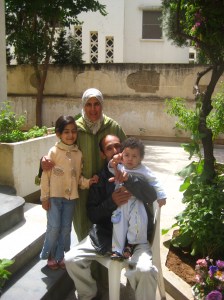
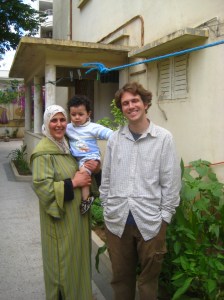
Hatred of the brown-skinned peoples of the dar al-islam has been both facilitated by and fostered by our wars in the Middle East. Being able to reduce all Muslims and Arabs to that image of barbarian bloodthirsty (or secretly restrained for purposes of infiltration) savages lets one think about the war in Iraq or Afghanistan or wherever else without associating the deaths incurred with real humans; those people are not my neighbor, are not even really human. Muslim people are people who are either shooting and blowing up things or getting blown up and shot; that is what they are there for and nothing can change it (‘they’ve always been like that’). Of course this is nonsense, and many of us know that it’s nonsense. But it’s powerful nonsense, and it infiltrates our minds and hearts, even when we recognize it for what it is. Way back in the spring while in Morocco I had been reading the news out of Iraq online, and I recall reading some particularly troubling stuff. I took a walk down towards the old city, and as I walked I looked at the people- men, women, kids- I was passing, and thought: people who look like this are the ones dying every —- day in Iraq, with my tax money, my unspoken acceptance. People like this, like the family I’m living with [see the photos below], like the people I am seeing now, living alongside. Real human beings. Of course I’ve long known all that- but for some reason it just clicked, and I nearly broke down with emotion, there on the sidewalk between the Hotel Zalagh and the McDonalds… These ‘bloodthirsty savages’ that we are conditioned to throw all together in one horrible image and hate- they have lives, dreams, children, flesh, blood, souls, voices, faces.

So. That leaves me a long ways from a bizarre occurrence in the library stacks.

Lord have mercy.
img_2127

Said Muhammad, Saida Fatima, and their two kids, Maryam and Yusef.
img_2111

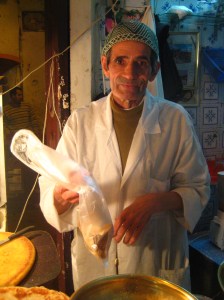
This man, whose name I have unfortunately forgotten, makes excellent fried bread. He also helped me practice my fusha Arabic (though one of his friends suggested I ought to drop the classical stuff and just do ‘street Arabic’!)

img_1090

A zellij craftsman over in the Andalusian quarter.
img_2131

Change We Can Believe In

From Spiked: Under Obama No Child Left Unmonitored. Don’t like No Child Left Behind? Notice that Federal intervention in education is producing less than admirable results? Question the validity of subjecting education to the dictates of State and Big Capital? The solution of the statist-left: make it bigger! Upsize! Increase funding! Greater federal control! If the Federalization of all education isn’t working, it needs to be intensified. We must increase the devotion of all levels of education to the needs of capital, er, the business sector. We must make sure poor parents are doing their bit to raise good wards for State and Capital- and remember, there’s no way Federal policy could ever be racist or classist- remember, we did that whole making history thing, right?

This is just one small aspect of the sort of leftist imperialism (external and internal) that in insiduousness and long-term viability is probably more destructive and dangerous than rightist sorts. Rightist statism has lately tended to manifest itself in spectacular and very public outbursts of violence and programs of mass control, though in the past couple of years even the Bush administration has toned down much of its action (probably out of sheer necessity). The left, on the other hand, is rather more clever about things in that much of its systems of violence and control are more hidden. Education is a useful example; abortion is another example of systematic violence that lies beneath the surface (literally in some respects) of society and even political discourse: “choice,” “reproductive health,” and so on are used to avoid the stark implications of reality. Likewise, we call our wars “missions to spread democracy,” “humanitarian interventions,” disguising the actual horrific nature of war.

Both sides also insiduously exploit religion to advance their causes, whether it’s the latest war as a crusade from God or abortion as a “spiritual sacrament.” The left tends to be in denial about its religious aspect, since part of its campaign against the right is “separation of church and state,” by which of course nothing more is meant that separation of rightist religion from the state; statist-leftist religion, whether in the guises of protected Christianities, bourgouis environmentalism, or the whole smorgasboard of liberal pieties used to advance the agenda of the day- none of these forms of religiosity are ever envisioned as being separated from the State. Instead, religion- and the same attitude exists on the statist-right- is perfectly acceptable so long as it remains in the service of a greater mission, that of the statist-left.

This is ultimately my problem also of course and I fall under the label of hypocrite too: I like my religion, just let’s not take this too seriously, eh? Sure, some of that exoticly-flavoured Orthodoxy can show through here and there, since it’s possibly advantageous out here in the academy. But let too much through, and you’re courting danger. That’s the message that is continually broadcast, and my internalization of it is hardly only from external forces- in tandem with my own passions, the desire to keep my “religion” nicely compartmentalized is terribly strong. Only the radical action of God can really ever break me, or anyone else, left or right or sideways, out of it.

Thoughts on Icons

1. The icon embraces the tension of the one and the many, of the universal and the particular. Each icon presents the mystery of the person as a particular mystery, the mystery of the named person who participates in the universal- yet particularly received- energies of God, is divinized. Divinization does not reduce the person into indistinguishableness; rather, it “expands” the person into her true self, her true realization in God. So the icon is not simply naturalism, but instead leans towards the mystery of realized personhood, the stylization of the icon indicating that this person has entered into this reality. When I view an icon I see a manifestation of what a true person can be, I am at once connected to that person and I am encouraged to live out my personhood in the energies of God.

The icon is also the possibility- both in itself and in what it says about matter- of the energies of God becoming manifest in a bewildering plurality of people and places and under a massive plurality of names and languages. Ambrosius Giakalis describes this potency in relation to the iconoclastic heresy:

“Fundamentally it was a debate about the locus of the holy. For holiness was not just a matter of personal piety; it was closely connected with the exercise of power in society. The legitimacy of material images as such was never a point at issue. The controversy revolved around which images could be regarded as vehicles of the holy. For the iconoclasts the holy was mediated to the people through material things consecrated by the clergy- the basilica with its liturgy, the Eucharist, the symbol of the cross. To have the holy mediated by a myriad icons seemed to them to dilute it to the point at which it ceased to be efficacious. The iconophiles, by contrast, sought through the icon to enable the holy to permeate the material world.”

The icon threatens the “secular” and the “bourgeois” in a way spiritualism and mere anti-materialism (in the strict sense of the word) cannot: it refuses to concede the created, the crafted, the material to the Devil, to the darkness of the age. The icon resists the commodification of everything, not by withdrawing from the material, from the manufactured even, but by embracing material reality and claiming it also for the Incarnate God. The material is not merely material for commodification and sale, for the use and exploitation of the fallen passions. The world is not conceded to the Devil; the world is not conceded to capitalism or the state or anyone else, but is contested by Christ and His saints. The icon then marks out materiality and material space as God’s; it is a redemption and a sign of redemption of matter, of the physical world, because it immediately participates in and transcends the “physical.”

2. Again, icons destabilize our language, by advocating the breaking in of God upon the world, of elevating the mystery of personhood in a manner we cannot speak. Early apologetics for icons emphasized their utility in educating the illiterate, yet at the same time they speak to the highly educated: the illiterate and the scholar meet on this un-worded ground of the Word, where the image cuts through language ultimately and moves the viewer/venerator to a different plane of knowledge, of participation. Kissing the icon is an action, is a movement beyond spoken language. It is an act of faith that expresses itself beyond what our words- as important as they are- are capable of. The image seen, the prayer uttered, the kiss done: multiple levels of the material and spiritual are involved, all becoming one transcendent act of prayer and veneration, reclaiming the whole for God, while pushing the limits of what can be said and what is expected of the world.

Agrarian Indie Music & A Couple Other Items

You might want to give a listen to this guy, who sounds like I would imagine a younger Wendell Berry if he played indie folk: Chris Dorman.

Also, while not agrarianish exactly, but still producers of the sort of music that befits a genuine culture of life, one of my perennially favorite bands, Anathallo, has a new album out next week that will no doubt be really wonderful and everyone should give a listen to.

And while I’m on the subject of music, this album, new(ish) to me, is one of the most beautiful albums of any sort I have listened to in some time. It’s a recording of a collaboration, in Terhan, between Hossein Alizadeh of Iran and Djivan Gasparyan of Armenia, and both musicians are world-class masters.

On Miracles and Wonder

“The miracle indeed of our Lord Jesus Christ, whereby He made the water into wine, is not marvelous to those who know that it is God’s doing. For He who made wine on that day at the marriage feast, in those six-water pots, which He commanded to be filled with water, the self-same does this every year in vines. For even as that which the servants put into the water-pots was turned into wine by the doing of the Lord, so in like manner also is what the clouds pour forth changed into wine by the doing of the same Lord. But we do not wonder at the latter, because it happens every year: it has lost its marvelousness by its constant recurrence. And yet it suggests a greater consideration that that which was done in the water-pots. For who is there that considers the works of God, whereby this whole world is governed and regulated, who is not amazed and overwhelmed with miracles? If he considers the vigorous power of a single grain of any seed whatever, it is a mighty thing, it inspires him with awe. But since men, intent on a different matter, have lost consideration of the works of God, by which they should daily praise Him as Creator, God has, as it were, reserved to Himself the doing of certain extraordinary actions, that, by striking them with wonder, He might rouse men as from sleep to worship Him.”

St. Augustine, On the Gospel of John

How often do we become caught up in the day-to-day mendacity of our lives, as we shuttle back and forth in our closed-up automobiles to and from closed-up spaces filled with the hum and glow of our computers and televisions and whatever other gadgets we have? If it was easy in St. Augustine’s time for people to lose sight of the wonder of creation, of the natural (or, for St. Augustine, supernatural) world all about, how much easier it is, who live in a universe that is consistently stripped of wonder?

In the Syriac tradition, as exemplified by Sts. Ephrem, Jacob of Serugh, John of Apamea, Isaac the Syrian, and others, wonder- at creation, at God, at God’s special actions on behalf of our salvation- is one of the keys of true theology. For Jacob of Serugh especially, without wonder theology is pretty useless- it is dry and without real connection, without real penetration of the heart and mind. Only in love and wonder before the beauty of God, manifested in His creation and His divine economy in Christ, can we truly understand, can we truly live the life of Christ. That is one of the reasons that Christ calls us to be ‘as little children’- to re-open our eyes to the wonder of God, to the wonder of life. This is not an easy thing to do- it’s far easier to settle into comfortable cynicism and detachment, which are fair enough attitudes no doubt for many aspects of contemporary life (or any period’s life), but are destructive if extended to all of life. When we grow so detached, so numbed to the world beyond our reductive science, our electronic screens, and the mundane tasks that we tend to have to engage in, we are not merely losing connection with nature- we are losing connection with God, with reality, and with the possibility of true humanity.

This is not to disparage as sinful or only destructive things like science, technology, work, and so on- but rather to suggest that we must constantly be careful to draw back from those things at times, to have our hearts and eyes open to the wonder inherent in the world that is, for all our concrete and fiber optics, still around us and visible. If we stop to contemplate things as simple as trees- we discover there is nothing simple or reductive about them, but, as St. Augustine tells us, they are a cause for wonder and adoration towards God, as exemplars of His creative power and sustenance. From there we can begin to re-engage wonder at the mystery of salvation, of God’s divine economy in the world. I think that if taken from this tack we are less likely to reduce those mysteries to mere dictum, objects to be analyzed and mechanistically digested or accepted. Instead, we begin to realize, with Jacob and Ephrem and Augustine, the wonder of the Incarnation of Christ, of our Lady, of the Divine Liturgy and the mystery of prayer. From there we have greater hope of doing true theology, of truly delving into the divine mysteries with our hearts and minds, beholding God, not in detachment, but in loving wonder.

Why I Am Not Voting In This Election

(Disclaimer: the following may offend you, and if it does, and you find yourself vehemently angry at me, forgive me. Pray for me a sinner.)

I occasionally mention to people that I do not plan on voting in the much-vaulted upcoming election, and could really care less which candidate wins- a proposition usually taken with curiosity, at the least. I suppose I owe an explanation of sorts for this shockingly heretical attitude- no, I’m not a full-fledged anarchist, though perhaps of the Dorothy Day sort… Rather, in appraising the two candidates, I cannot support either one, for reasons of the deepest importance. One may ask, why not vote third-party? For one thing, I am not all jazzed about anyone running- Chuck Baldwin is apparently a moral majoritarian sort, the Libertarians have fielded what seems like a Republican-lite candidate, and so on. Besides, let’s be quite honest, voting for anyone apart from the two is quite pointless no matter where you live. As it is, a vote for either McCain or Obama would probably be pretty pointless here, Tennessee being a state pretty well placed in McCain’s column. But regardless. Why then can I not support either candidate?

Both men represent systems of doing things that are rooted in fundamental violence and oppression; they both reflect and do not question in their own way- alike though not identical- the culture of death that both supports and informs that American State (not that it’s unusual in that). A vote for either one is a vote for continuing systematic, intense, State-funded and supported violence and aggression. They only differ in their preferred targets, and that is all. Obama, to begin with, is not and has never been the “peace candidate,” even excepting his undiminished support for abortion-on-demand. While his early rhetoric sounded anti-war and even slightly radical, he has long since obediently and probably willingly shifted into the usual centre-right position, an advocate of American exceptionalism- one supported only part of the time, in certain places, by bombs and bullets, you understand. Mr. Obama would have us leave off one war- that in Iraq (though not too quickly!)- in order to escalate another, in Afghanistan and Pakistan. That even more civilians are being slaughtered by American “smart” bombs in the latter places seems to be of little importance; it is the good war, after all, and that no one disputes. Besides those stated objectives, Mr. Obama would have us continue to proselytize the world for democracy etc etc, and in those promises the threat of force is never far behind, even if the Democrats at the moment prefer to not emphasize it.

As far as Mr. McCain’s approach to foreign policy goes, one hardly need say anything. Obama at least wraps his imperialism in lofty rhetoric and sometimes anti-war sounding evasions; McCain stands on a stage and sings about obliterating brown people with his bombs. He fully and unapologetically embraces the war machine; hatred of the enemy and mass violence are necessary for his campaign’s success after all.

But that is not the only issue in which the two candidates embrace systems of brutal violence and oppression. Obama is an unapologetic, if not particularly outspoken, proponent of industrialized abortion, the systematic violence against unborn child and mother. Not only are we asked to tolerate this subculture of death and violence, but we are asked (well, with the State there isn’t “asking,” only telling) to support it. This violence is in fact made sacrosanct, in one of the great perversions of modern life: the “right” to destroy is not only important, but essential, the underpinning of the all-holy human (well, the right sort of human that is) ability to control all things, from unwanted children to unwanted nations. “Consumer choice” invades the womb and bombs the world.

Neither candidate has seriously challenged or even discussed the ongoing violence and destruction propagated in the name of the “war on drugs.” Its victims do not enter the national discourse; Obama has given vague soundbites about “reforming” in some vague way the war, but just as in his foreign policy, this only means a shifting a resources, the dropping of bombs on a different group of the poor. As for McCain, again, there is nothing hidden here. Both candidates leave unquestioned the pervasive evils of the drug war; neither can imagine or desire to imagine alternatives to this great projection of deeply violent State power. Why should they? Again, State violence becomes virtually sacrosanct: the drug war, the war on terror, are all holy wars, the fight of noble Civilization against its dark, murderous enemies.

McCain, despite having once sought immigration reform of a sort, is now parroting the xenophobic lines of the hard right, endorsing yet another system of dehumanization and violence, yet another front for creating enemies and targets. Racist tactics are, as politicians have long known, particularly in my part of the world, one of the most effective ways for stirring human passions and fears, and directing them into creating you more power.

Knowing all this- that to endorse either candidate is to endorse systematic violence against my neighbor- how can I in good conscience vote for either? How can I listen to the words of Christ, how can I claim citizenship in the Kingdom of Heaven, and give my assent to these sorts of things? Do not suggest to me the lesser of two evils- am I too choose which forms of violence and evil I reject less strongly?

Am I suggesting running away from the world because it’s messy? No- instead of voting, do something that matters, go get messy, stand up against the currents of violence and despair, rebel against the culture of death: go find a homeless person and buy him lunch. Befriend a lonely person. Plant a garden. Go to church. Go find your neighbor, talk to her, love her. Go find the closest nursing home and visit the elderly. Volunteer at a crisis pregnancy centre. Treat the immigrant like a human being. Pray. Forgive your enemy. Love him, however you can. Don’t vote for his annihilation.

The Wrong Message

I was driving on the interstate the other day when I noticed a big billboard for a church. Now, here in the American South religious oriented billboards are nothing noteworthy, but this one stood out. It read: “Real. Comfortable. Church.” in big letters, next to a picture of a couch, along with the name of the particular church being advertised. I was floored- comfortable church? My initial thought was, man, at my church we stand up for the entire service, I wonder if we could figure out how to get that on a billboard- maybe a guy standing and another prostrating, someone having an allergic reaction to the incense, with a caption like “Orthodoxy: Real. Uncomfortable. Church.” Fr. Justin and I talked about the sign this evening- he had noticed it also- and he suggested, in a more serious vein, “Real. Martyred. Church.”- but more on that in a moment.

On further contemplation, there are a multitude of things that greatly bother me with the image of a “comfortable church.” Now, I suppose someone could construct a justification for the term, how it’s meant to attract people turned off of church by all the various things that turn people off to Christianity. There are types of discomfort that should, must be avoided in church- the discomfort of vicious politics and character assasination, the intercine struggles and nastiness and internal schisms, the hurt feelings and the ruined relationships over petty things- all the things I’ve seen in church life (I grew up literally on church property as a pastor’s son, and got to see all the dark secrets from the inside), all of which cause intense discomfort and should be avoided. But there are also numerous, absolutely vital ways in which we ought to be intensely uncomfortable when we go to church- indeed, if we are not somehow discomforted, then we are missing out on the whole point of the Gospel! Christ did not come to tell us all how wonderful we are, and how we can just go on doing what we’re doing- and oh if you’d like and you’d say your quick prayer you can come chill with Me on my couch in Heaven after you knock off down here.

No! Sed contra, Christ declares to the world as a whole and to each one of us- look at your lives! Look at the sin, the injustice, the violence, the oppression, the self-destruction you’re perpetrating on yourself, on everyone around you! Repent! Is the call to repentance comfortable? Does it make us feel good when someone calls us on our actions? Why do you think they threw Jeremiah in the pit? Why did they- we- crucify- still crucify- Christ? Because He, and all the saints and prophets, disturb our comfort, our cherished love of our selves that will brook no one telling us otherwise. Because the prophets come telling us we have blood on our hands, that our comfort is paid for with the blood of the oppressed. Because Christ comes telling us that our comfort in our selves will lead us straight to Hell, that we are living, not the life of God, but the unlife of the Enemy so long as we linger in our drugged out comfort built on sin and deceit.

Christ came, as was said of Dorothy Day, “to comfort the afflicted and to afflict the comfortable.” Why? Because we- the comfortable (and that includes most of us living here in the West, where life is handed to us on a silver platter, compared to the plight of people in much of the Majority World)- must be afflicted with the truth if we are to wake up to our true state, and seek repentance and the genuine life of Christ.

And that life- once we have been jarred from our sleep, rolled off the couch into the light and truth of Christ- is not easy, is not cozy comfort. Christ gives us consolation and relief from the despair of sin and the blindness of the world and its comforts (which really are no comforts at all but mere opiates)- his yoke is easy and his burden is light- but he also calls us to a very specific form of life. He calls us to pick up our Cross and carry it with Him- and as the Apostles who first heard that message would have known immediately, carry a cross means getting crucified, it means death. Crucifixion is not comfortable. Getting martyred is not comfortable. Christ calls us to spiritual combat, but it is not push-button bombing from an armchair. It is the warfare of love, our weapon is the cross, the weapon of peace, and our tactics are turning the other cheek, forgiving our enemies, dropping the literal sword, cutting off our anger and our hatred and turning to love. This is not comfortable! God knows all of this is hard, it sounds hard, and it is hard- loving your enemies, living a life of constant prayer, rejecting the opiates of the world- if it was easy, if it was comfortable, we’d all be doing it like we should, I’d be doing it like I should and not slipping back into the blissful ignorance and sleep of the world. Christ calls us to look our sin in the face and call it what it is- extremely uncomfortable. Christ calls us to look the homeless man on the street and call him human and mean it. Christ calls us to look at those icons of the saints and the martyrs and embrace them and seriously imitate them- even to death. It is not comfortable, it is not easy, it is at variance with a world that embraces the grossest extremes of comfort, that has desensitized itself to the killing of the unborn and the killing of its enemies in distant lands, that dresses its worst and most brutal violence in comfortable tones and images. The Church is not called to be a comfortable church, a church that exists to affirm the violence and sin of State and Society. The Church is called to be a martyred Church, one that stands against the comforts of its age and suffers for its witness.

I do not need any more comfort. I am stupidly comfortable in my quiet little mostly untroubled existence. I get up, go about my business and if I avoid the homeless men over in Downtown and don’t pay too much attention to my prayers I usually manage to feel pretty good about myself every day. May God save me, save all of us, from feeling good about ourselves, from being comfortable with our sin and the violence and despair around us. May God wake us up, roll us off the couch, and may we pick up the cross and really, truly, follow after Christ. May God grant us to live as a martyred Church, a Church that has died to the world and is living the difficult, demanding, but true, life-filled and life-affirming, the light-filled life of the Crucified Christ.

Theodore Abū Qurrah on the Veneration of Icons

Theodore Abū Qurrah was the first Christian writer whose name has come down to us to write in Arabic. As such, he is particularly interesting for his early approach to presenting Christian theology and praxis in an environment that had already become heavily Islamicized by his lifetime (755-830 AD) a hundred years after the Arab conquest and the establishment of the Umayyid state in Syria. One of the changes Abū Qurrah dealt with in his writings was the change in Christian attitude towards icons, or, more specifically, the public veneration of icons in church. In early Islam particularly, depictions of humans was, if not completely proscribed, considered with extreme suspicion if not outright declaration of being forbidden. While this attitude has hardly ever really been universal, and is by no means universal now (while in Fes I purchased a wonderful poster of scenes from the Qu’ran and Islamic legend, plus a local saint, which I will eventually get around to scanning onto my computer and posting one of these days, ان شاء الله), the iconoclastic current of Islam has always been strong, and was particularly hostile to Christian iconography in Abū Qurrah’s day.

More specifically, Christians were being mocked by their Muslim neighbors, and accused of being idolatrous, because of their veneration of icons. Now, granted, being mocked and insulted is a hardly out and out persecution, but in a miliue that had become heavily Islamicized, and with Muslims occupying the highest positions, this sort of mockery had a deep impact. Plus, Christianity had already undergone the massive shock of Islamic conquest, which by itself tended to weaken the hold of Christian dogma on the masses. Mocking icons and calling them idols was only one more element in the weakening and dissolution of Christianity as a popular religion (something Abū Qurrah states in his defense of icons in fact). Not only were icons themselves mocked, but the depiction of Christ crucified was a particular object of scorn, as the Qur’an states very explicitly that Christ was not crucified, and for Sunni Islam the crucifixion is very incongruous with the way God is expected to act (Shia Islam, on the other hand, very much embraces the idea of redemptive suffering and shame, but that is another story).

How Abū Qurrah responds to the charges regarding Christ and the seeming foolishness and weakness evidenced in the Christian account is fascinating- he embraces the seeming absurdity of Christian doctrine- but here I would like to draw attention to a passage from his work ‘A Treatise on the Veneration of the Holy Icons’ (translated by Sidney Griffith) in which he deals with icons, and, more specifically, the veneration offered to them. The passage is noteworthy because he seeks to establish analogies within both Judaism (his preferred, and generally safer, debate partner throughout this particular polemic) and Islam for Christian practice. After establishing Jewish and Islamic parallels or analogies he goes on to describe Christian practice, thereby attempting to remove some of the distance between the three faiths- and hence somewhat reduce the polemical sting and weight of arguments against Christianity (since he is hardly attempting some sort of ecumenical unity or agreement). However, in this brief passage there is a good example of what Abū Qurrah is doing- reproducing earlier arguments (St. John of Damascus is continually in the background) and re-contextualizing them in the new Islamic environment.

From Chapter XI: ‘It is inevitable that the act of prostration goes to what the intention has in mind in the flexing of the knees, putting down the forehead, and the direction one faces. Since this is so, anyone with a question should understand that Jacob made a prostration on Joseph’s staff, intending thereby to honor Joseph… So too we Christians, when we make prostration in front of an icon of Christ or of the saints, our prostration is certainly not to the panels or to the colors. Rather, it is only to Christ, to whom every kind of act of prostration is due, and to the saints to whom it is due by way of honor.

‘One should also recall what we said about everyone who makes a prostration to God; his two knees touch but the ground or a carpet, yet his prostration is conveyed only according to what he intends- to make an act of prostration to God.

‘It is the same with the Christians; their touching the icon in the process of their making the act of prostration is in accordance with what they want to do- to honor Christ, their God, or his saints, or the prophets, or the apostles, or the martyrs, or someone else.’

A second, more direct reference to Islam comes a little earlier in the text, in Chapter IX, in which Abū Qurrah quotes from the Qur’an and employs at the conclusion a distinctly Qur’anic sounding phrase.

‘Understand that performing the act of prostration is sometimes by way of worship, and sometimes by way of something other than worship. There are people other than you, O Jew, among those who say that it is not permissible to make an act of prostration except to God. They too mock the Christians for their practice of making prostration to the icons and to people. They maintain that making the act of prostration is worship, all the while having it in mind that “God commanded all the angels to prostrate themselves to Adam, and they prostrated themselves, except Iblis refused, and came to be among the unbelievers” (al-Baqara II:34). If prostration is an act of worship, then without a doubt, according to what you say, God in that case commanded the angels to worship Adam! Far be it from God to do that!’

Odds and Ends, Fes Medina

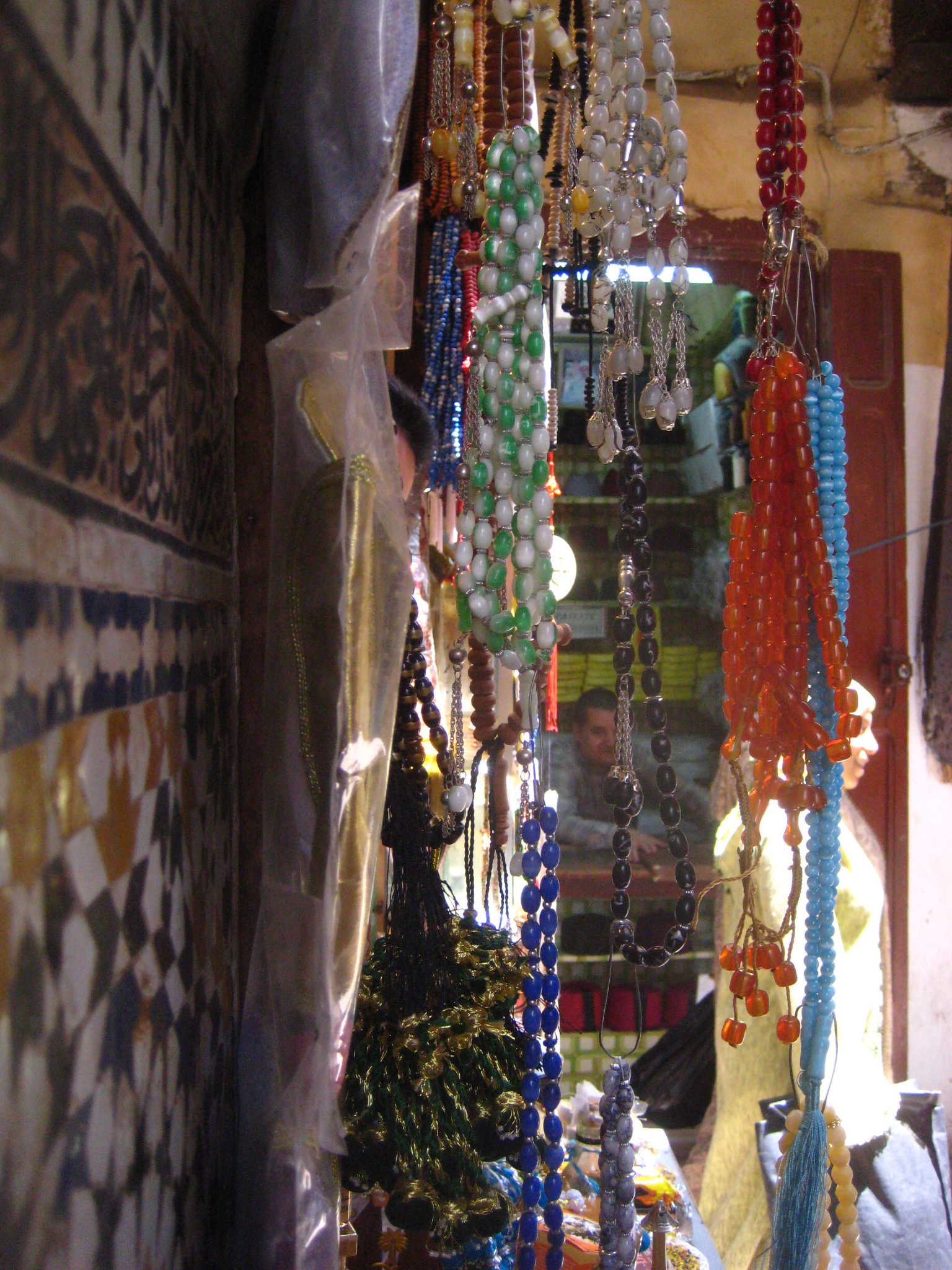
These are rosaries for sell outside of the shrine of Moulay Idriss II, the founder and (current) patron saint of Fes. The haram-precinct surrounding the shrine is filled with small shops selling rosaries, incense, candles, and other devotional aids, as well as sweet-meats (Idriss being the patron of sweet meats as well as the city, apparently).

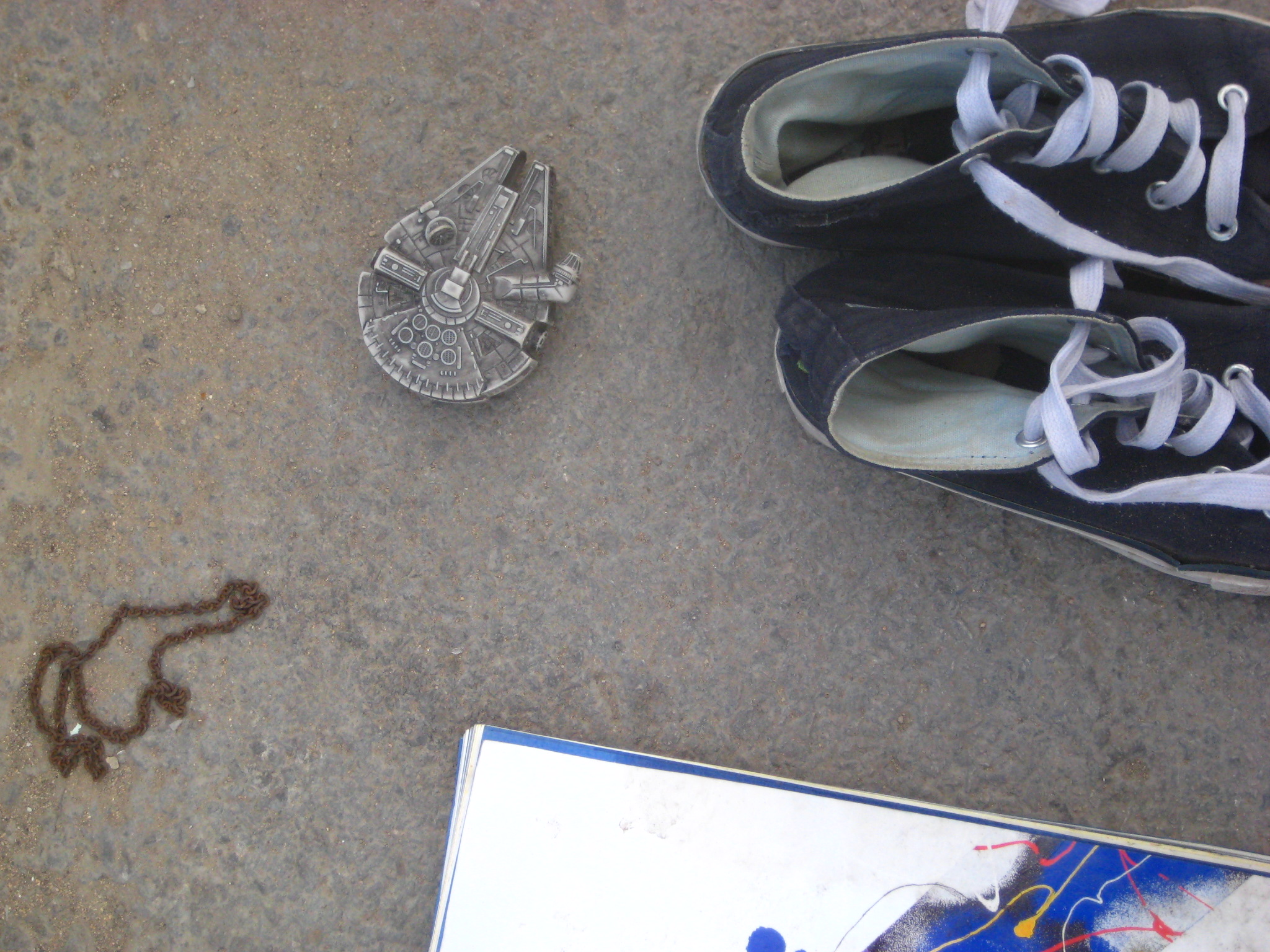
The Millenium Falcon in miniature showed up at a flea-market at the edge of the Andalusian Quarter, along with a host of other wonderful items, including stacks of used Heinenkin bottles…

The rose-petal and rose-water vendor down Tella Kabira, just below the meat-sellers quarter. The olfactory contrast is intense.

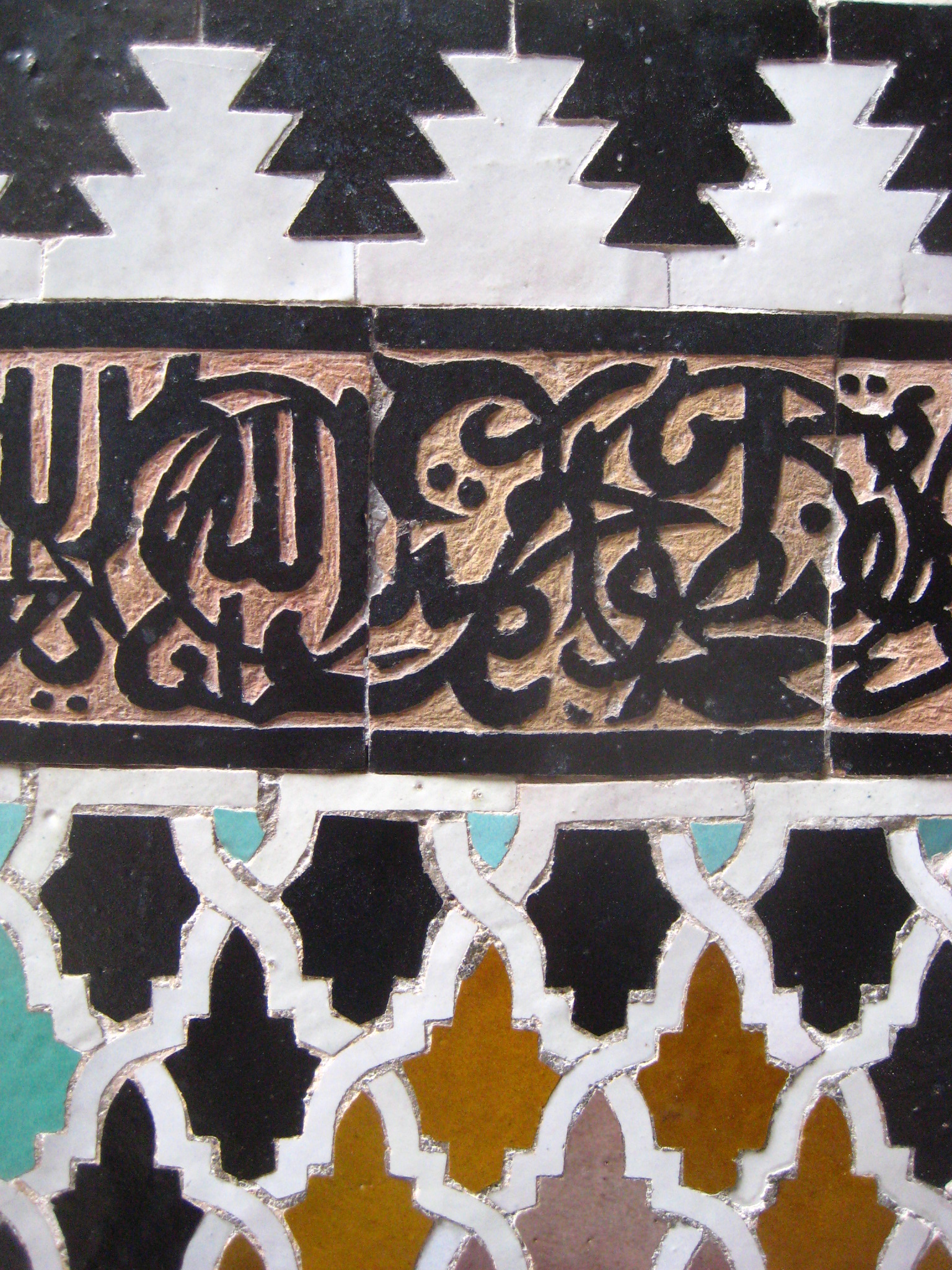
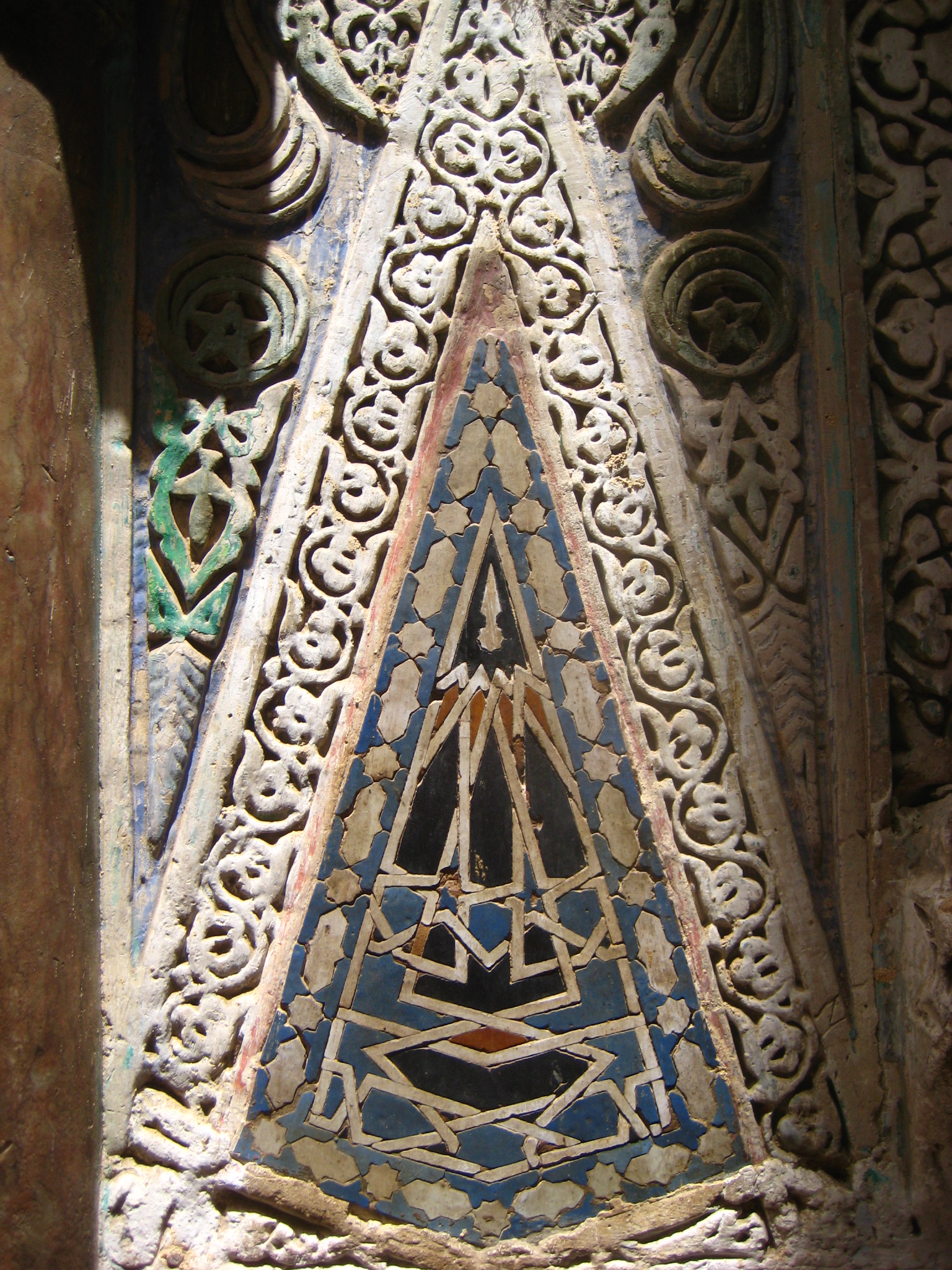
Zellij tile and calligraphy in a medrasa in the Andalusian quarter.

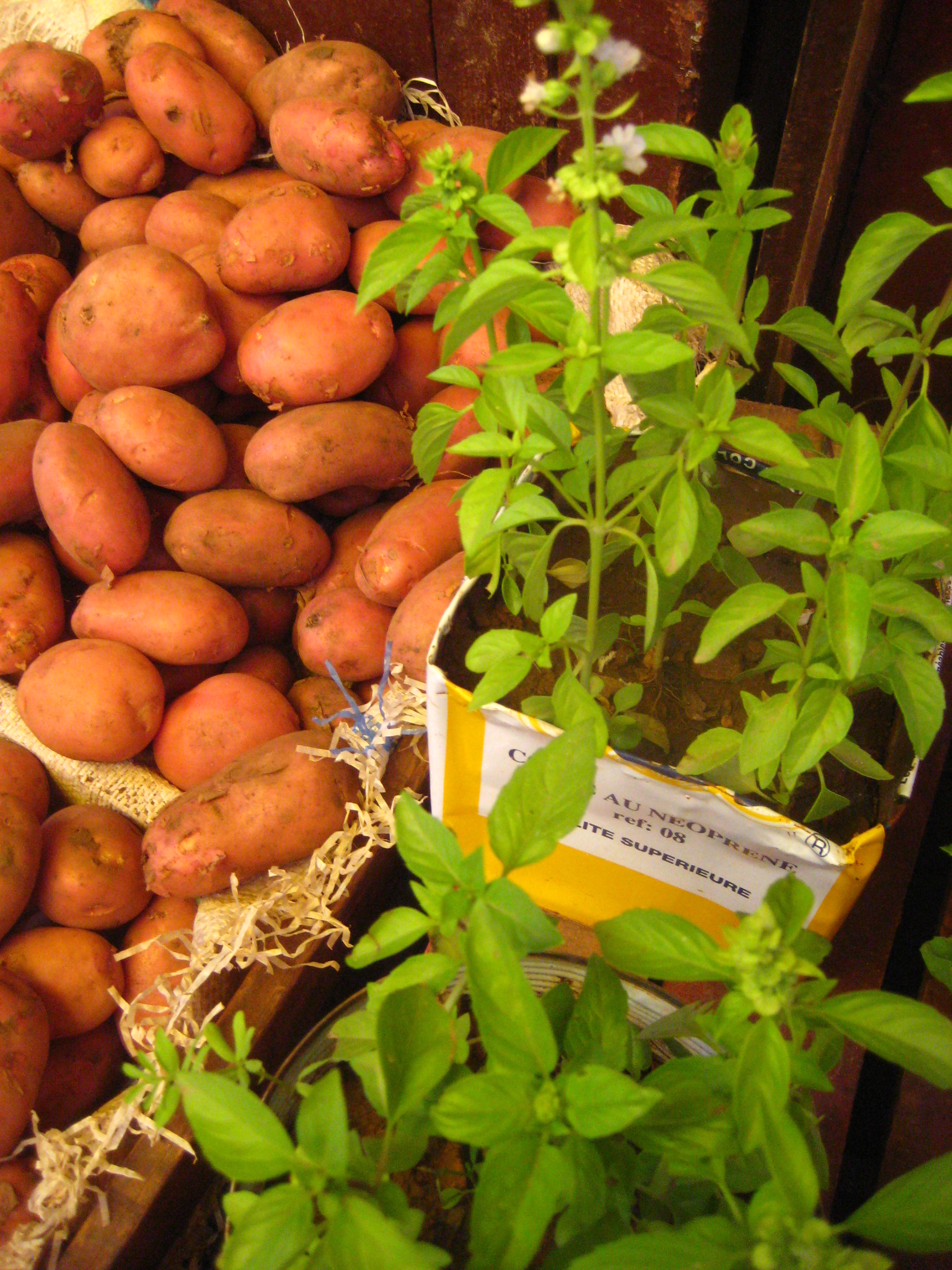
Potatoes and herbs on or near Zanqa Romain.

An interesting piece of decoration of the exterior of the Moulay Idriss shrine. I’m afraid I have no idea of its symbolic import- assuming it has some- so if perchance anyone out there knows, I’d love to be filled in.