The Morning Commute

I live a couple miles east of the university; every morning I descend on my bike the hill my neighborhood is perched on and take a greenway that runs alongside the Tennessee River. It comes out below the university, leaving a short hustle uphill to get on campus. All in all, a hard to beat commute. Though the up-hill journey coming back is less enjoyable.

Trumpet creeper vines

The Tennessee River (well, the Tennessee Lake these days, to be more accurate)

Morning glories are everywhere and in multiple colors along the river.

Downtown comes into view

The Wrong Message

I was driving on the interstate the other day when I noticed a big billboard for a church. Now, here in the American South religious oriented billboards are nothing noteworthy, but this one stood out. It read: “Real. Comfortable. Church.” in big letters, next to a picture of a couch, along with the name of the particular church being advertised. I was floored- comfortable church? My initial thought was, man, at my church we stand up for the entire service, I wonder if we could figure out how to get that on a billboard- maybe a guy standing and another prostrating, someone having an allergic reaction to the incense, with a caption like “Orthodoxy: Real. Uncomfortable. Church.” Fr. Justin and I talked about the sign this evening- he had noticed it also- and he suggested, in a more serious vein, “Real. Martyred. Church.”- but more on that in a moment.

On further contemplation, there are a multitude of things that greatly bother me with the image of a “comfortable church.” Now, I suppose someone could construct a justification for the term, how it’s meant to attract people turned off of church by all the various things that turn people off to Christianity. There are types of discomfort that should, must be avoided in church- the discomfort of vicious politics and character assasination, the intercine struggles and nastiness and internal schisms, the hurt feelings and the ruined relationships over petty things- all the things I’ve seen in church life (I grew up literally on church property as a pastor’s son, and got to see all the dark secrets from the inside), all of which cause intense discomfort and should be avoided. But there are also numerous, absolutely vital ways in which we ought to be intensely uncomfortable when we go to church- indeed, if we are not somehow discomforted, then we are missing out on the whole point of the Gospel! Christ did not come to tell us all how wonderful we are, and how we can just go on doing what we’re doing- and oh if you’d like and you’d say your quick prayer you can come chill with Me on my couch in Heaven after you knock off down here.

No! Sed contra, Christ declares to the world as a whole and to each one of us- look at your lives! Look at the sin, the injustice, the violence, the oppression, the self-destruction you’re perpetrating on yourself, on everyone around you! Repent! Is the call to repentance comfortable? Does it make us feel good when someone calls us on our actions? Why do you think they threw Jeremiah in the pit? Why did they- we- crucify- still crucify- Christ? Because He, and all the saints and prophets, disturb our comfort, our cherished love of our selves that will brook no one telling us otherwise. Because the prophets come telling us we have blood on our hands, that our comfort is paid for with the blood of the oppressed. Because Christ comes telling us that our comfort in our selves will lead us straight to Hell, that we are living, not the life of God, but the unlife of the Enemy so long as we linger in our drugged out comfort built on sin and deceit.

Christ came, as was said of Dorothy Day, “to comfort the afflicted and to afflict the comfortable.” Why? Because we- the comfortable (and that includes most of us living here in the West, where life is handed to us on a silver platter, compared to the plight of people in much of the Majority World)- must be afflicted with the truth if we are to wake up to our true state, and seek repentance and the genuine life of Christ.

And that life- once we have been jarred from our sleep, rolled off the couch into the light and truth of Christ- is not easy, is not cozy comfort. Christ gives us consolation and relief from the despair of sin and the blindness of the world and its comforts (which really are no comforts at all but mere opiates)- his yoke is easy and his burden is light- but he also calls us to a very specific form of life. He calls us to pick up our Cross and carry it with Him- and as the Apostles who first heard that message would have known immediately, carry a cross means getting crucified, it means death. Crucifixion is not comfortable. Getting martyred is not comfortable. Christ calls us to spiritual combat, but it is not push-button bombing from an armchair. It is the warfare of love, our weapon is the cross, the weapon of peace, and our tactics are turning the other cheek, forgiving our enemies, dropping the literal sword, cutting off our anger and our hatred and turning to love. This is not comfortable! God knows all of this is hard, it sounds hard, and it is hard- loving your enemies, living a life of constant prayer, rejecting the opiates of the world- if it was easy, if it was comfortable, we’d all be doing it like we should, I’d be doing it like I should and not slipping back into the blissful ignorance and sleep of the world. Christ calls us to look our sin in the face and call it what it is- extremely uncomfortable. Christ calls us to look the homeless man on the street and call him human and mean it. Christ calls us to look at those icons of the saints and the martyrs and embrace them and seriously imitate them- even to death. It is not comfortable, it is not easy, it is at variance with a world that embraces the grossest extremes of comfort, that has desensitized itself to the killing of the unborn and the killing of its enemies in distant lands, that dresses its worst and most brutal violence in comfortable tones and images. The Church is not called to be a comfortable church, a church that exists to affirm the violence and sin of State and Society. The Church is called to be a martyred Church, one that stands against the comforts of its age and suffers for its witness.

I do not need any more comfort. I am stupidly comfortable in my quiet little mostly untroubled existence. I get up, go about my business and if I avoid the homeless men over in Downtown and don’t pay too much attention to my prayers I usually manage to feel pretty good about myself every day. May God save me, save all of us, from feeling good about ourselves, from being comfortable with our sin and the violence and despair around us. May God wake us up, roll us off the couch, and may we pick up the cross and really, truly, follow after Christ. May God grant us to live as a martyred Church, a Church that has died to the world and is living the difficult, demanding, but true, life-filled and life-affirming, the light-filled life of the Crucified Christ.

It Is Like a Great Poem

John Scotus, influenced by Pseudo-Dionysius, considered the area of Scripture in its origins and in its end term, in the first, fresh simplicity of its beaming divine radiance and in the rediscovered unity of all things in it. What is simpler than the Word, what is more one than what he gathers together for eternity? But in coming to us simplicity is fragmented, or, rather, simplicity becomes fecund and fruitful, it opens itself up to the multiplicity that it engenders, so as to gather it up at later stage and contain in it in its bosom: “in that whole notion of simplicity, however, there are to be found many facets of speculative thought.” This whole intermediate area, comprised as it is of multiple sacraments that are united in the sacramental mystery of the flesh of Christ, is given to us, during our terrestrial existence, for our varied and many-sided contemplation. Thus, without losing the primordial unity that it possesses in the Word, Scripture does not discourage our making use of a whole gamut of senses, which are as numerous as the many colors of a peacock’s tail. This is an image that John Scotus could have received from Cassiodorus, who made a special application of it to the Psalter. To speak in more concrete terms, the interpretation of Scripture is indefinite, being as it is in the image of the infinity of its Author. It is like a great poem, with a pedagogical intent, whose inexhaustible significance leads us to the pure heights of the summit of contemplation.

Henri de Lubac, Medieval Exegesis, Vol. 1, p. 77

This Heart is Filled With Pity For All God’s Creatures

I am stealing the quotation below from Fr. Stephen; it sums up the way we must relate to a very unjust and violent world, stuff like this and this and this and…. Those injunctions about loving your enemy, putting down you sword- they seem easy enough when we’re just talking about personal enemies (not that they are easy in those instances, even), but they’re even harder when we’re talking about genuinely evil actions, systems and pervasive patterns of injustice- shooting wars, not just the personal verbal battles we fight all too often. What is the way the St. Silouan offers? Pick up the sword only when a really genuine revolution summons? No- pray for the evil people (yourself included), feel the deepest compassion for them. This is the only way, the only way really to truly and authentically resist evil. Lord knows I’ve often felt the urge to pick up the sword, to want to see the powerful evil-doers pay, here, now, to not get away with it. According to St. Silouan- and he has Christ Himself backing him up- that is the wrong spirit. Only love can overcome, forgiveness and compassion- for all- are the only real way.

Lord have mercy on us.

If you think evil of people, it means you have an evil spirit in you whispering evil thoughts about others. And if a man dies without repenting, without having forgiven his brother, his soul will go to the place where lives the evil spirit which possessed his soul.

This is the law we have: if you forgive others, it is a sign that the Lord has forgiven you; but if you refuse to forgive, then your own sin remains with you.

The Lord wants us to love our fellow-man; and if you reflect that the Lord loves him, you have a sign of the Lord’s love for you. And if you consider how greatly the Lord loves His creature, and you yourself have compassion on all creation, and love your enemies, counting yourself the vilest of all, it is a sign of abundant grace of the Holy Spirit in you.

He who has the Holy Spirit in him, to however slight a degree, sorrows day and night for all mankind. This heart is filled with pity for all God’s creatures, more especially for those who do not know God, or who resist Him and therefore are bound for the fire of torment. For them, more than for himself, he prays day and night, that all may repent and know the Lord.

Christ prayed for them that were crucifying him: ‘Father, forgive them; for they know not what they do.’ Stephen the Martyr prayed for those who stoned him, that the Lord ‘lay not this sin to their charge.’ And we, if we wish to preserve grace, must pray for our enemies. If you do not feel pity for the sinner destined to suffer the pains of hell-fire, it means that the grace of the Holy Spirit is not in you, but an evil spirit. While you are still alive, therefore, strive by repentance to free yourself from this spirit.

St. Silouan

You Think the Police State Only Targets Brown People?

Think again, comrade. And you thought it was bad when they stuck political dissenters in “free speech” zones- ie cages. Now, at least in St. Paul, they’re not even bothering to give lip-service to such out-moded concepts as free speech- just bust down the doors and arrest the dissenters. I mean, it’s worked for other states, why not here? Don’t you know there’s a war on, comrade?

From Glen Greenwald’s article:

Jane Hamsher and I were at two of those homes this morning — one which had just been raided and one which was in the process of being raided. Each of the raided houses is known by neighbors as a “hippie house,” where 5-10 college-aged individuals live in a communal setting, and everyone we spoke with said that there had never been any problems of any kind in those houses, that they were filled with “peaceful kids” who are politically active but entirely unthreatening and friendly.

In the house that had just been raided, those inside described how a team of roughly 25 officers had barged into their homes with masks and black swat gear, holding large semi-automatic rifles, and ordered them to lie on the floor, where they were handcuffed and ordered not to move. The officers refused to state why they were there and, until the very end, refused to show whether they had a search warrant. They were forced to remain on the floor for 45 minutes while the officers took away the laptops, computers, individual journals, and political materials kept in the house.

Good Counsel

Hattiesburg, MS, August, 2008.

Please pray for the Gulf Coast region, especially New Orleans, as yet another hurricane bears down, maybe worse than the last one. I only moved from South Mississippi a few weeks ago, and in the intervening space it seems like my home region can’t stay out of the news, and it’s not been good news.

Lord have mercy, Lord have mercy, Lord have mercy.

Islamic Iconography From Fes

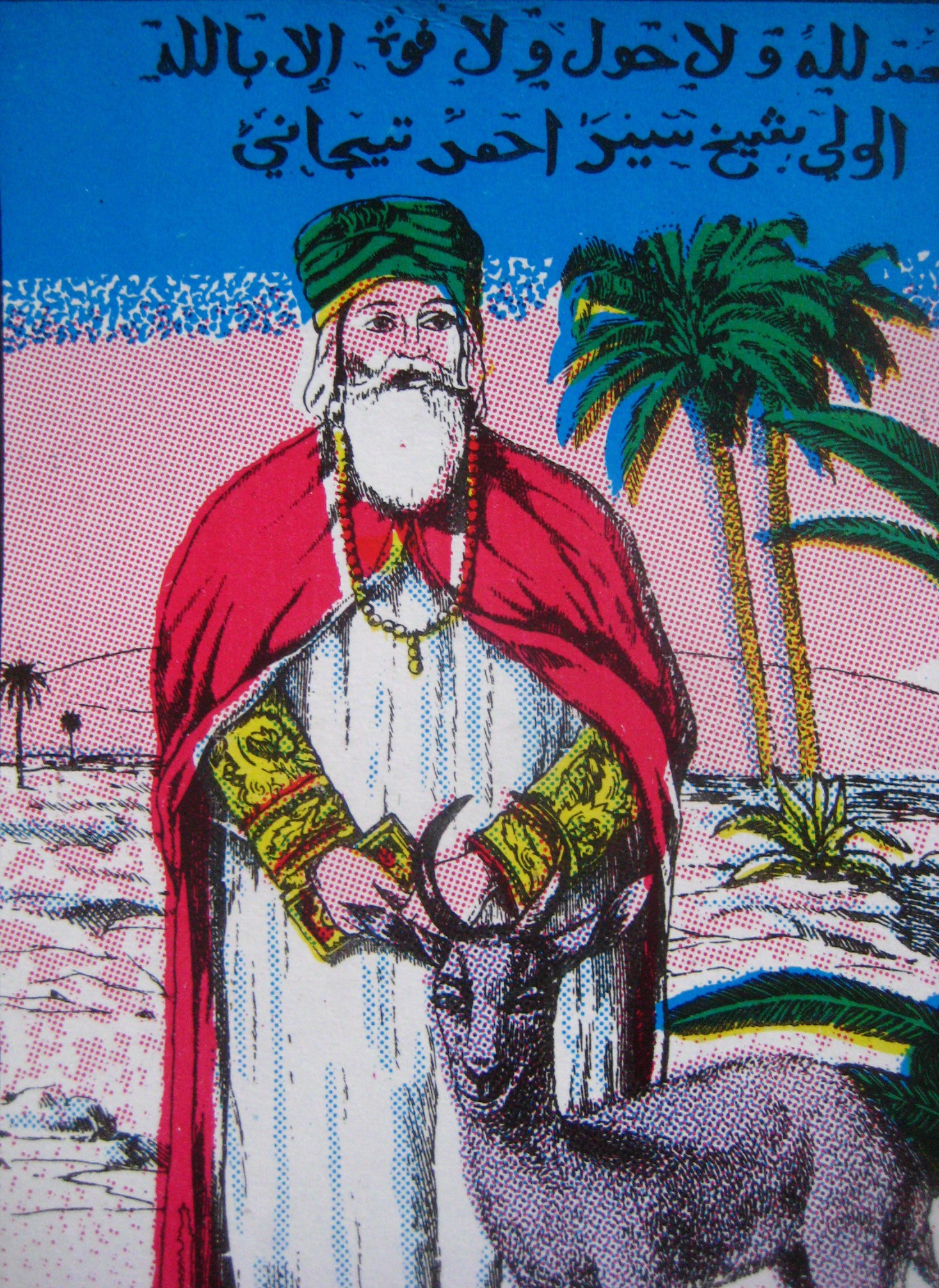
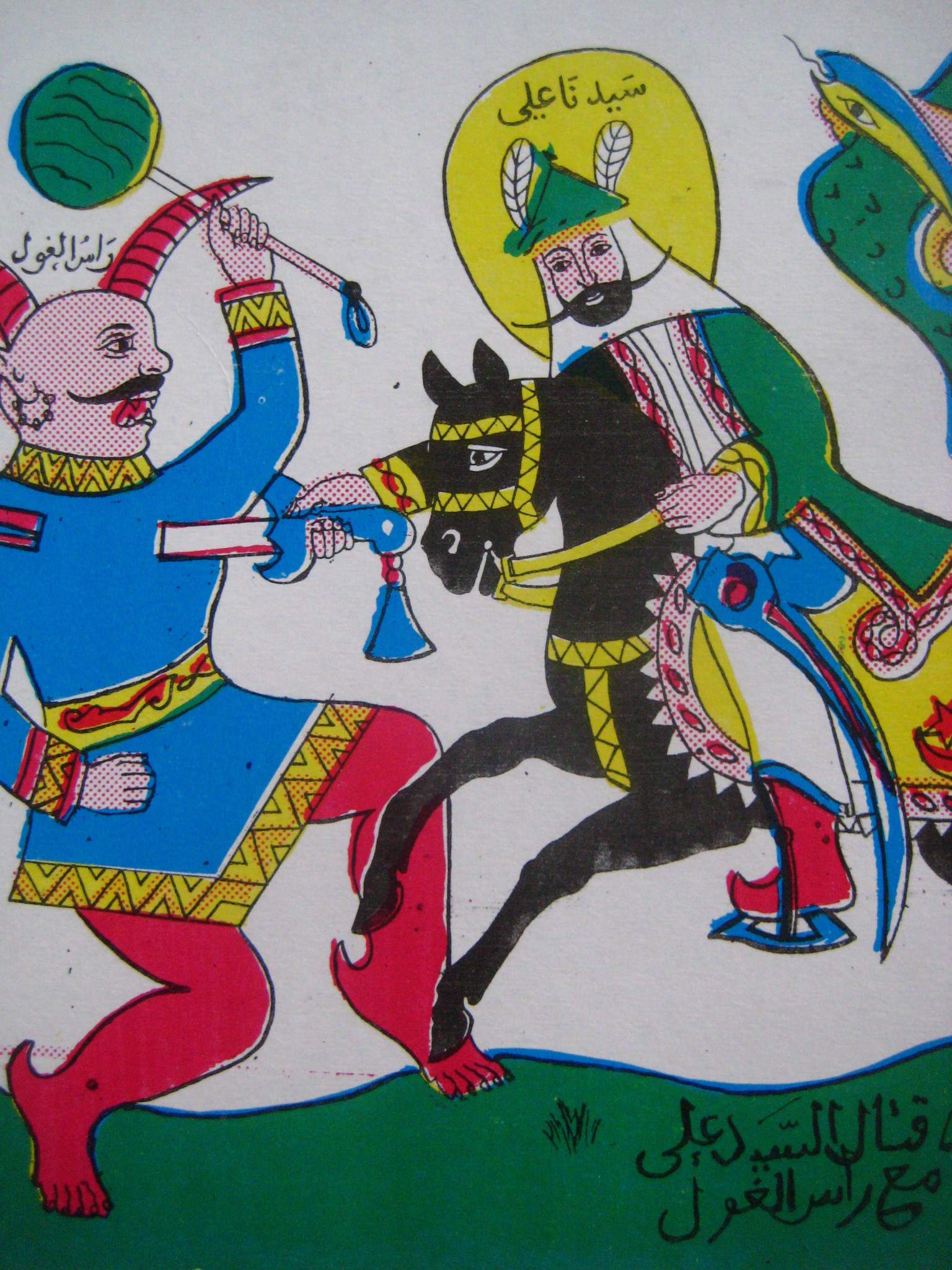
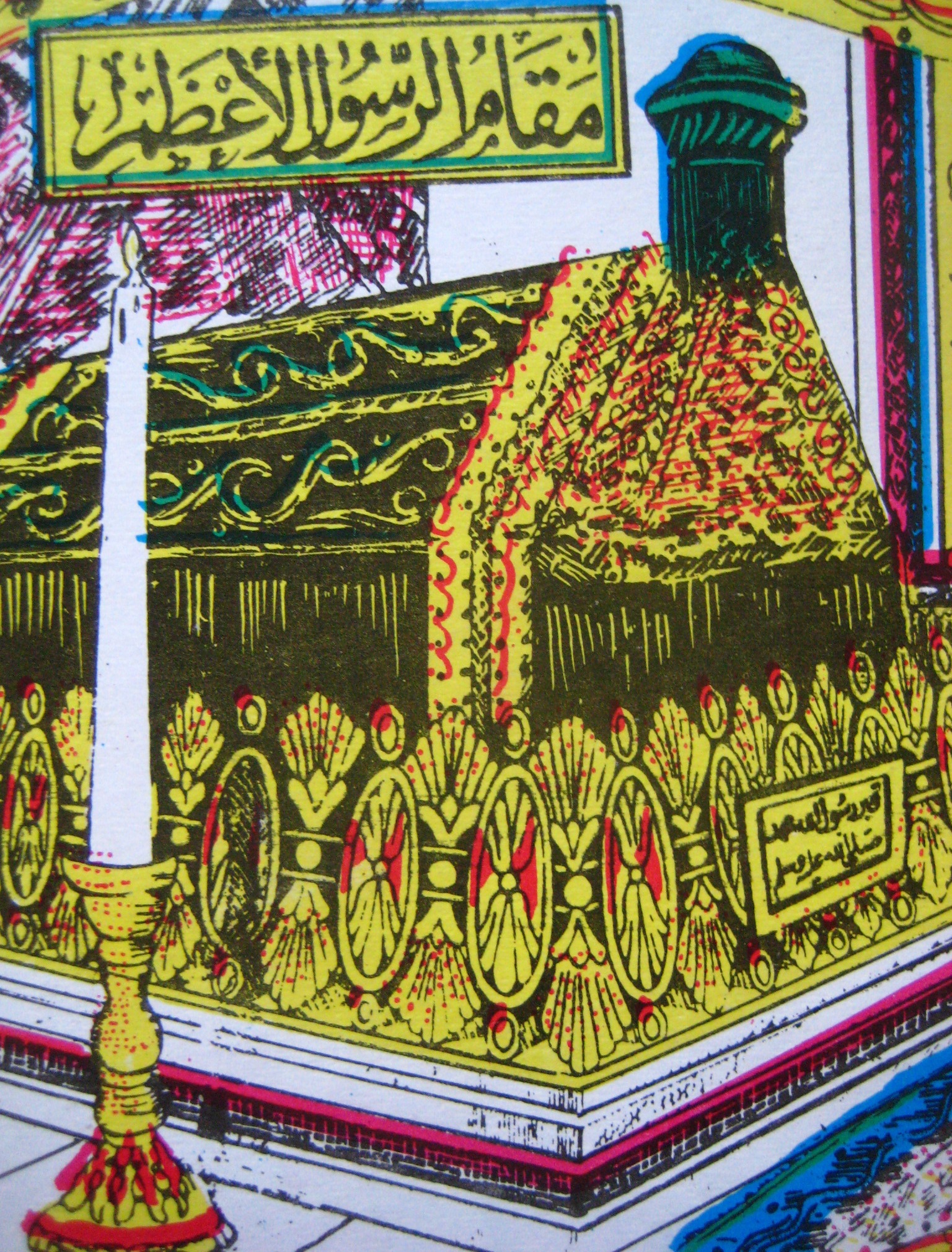
The images below come from a card-stock poster I found at a miniature flea-market of sorts an elderly Fassi would hold pretty regularly on the north side of the Qarawiyyin Mosque. He had, among other things, a couple other similar posters, along with random booklets, magazines, spoons and forks, and various trinkets and odds and ends. The iconography is what caught my eye- while iconography of various kinds is common enough in Morocco, this particular example stood out for its colorfulness and the sheer volume of visual activity in one piece of card-stock. I don’t know the origin or the history of this document, other than that it was probably produced in Fes, as one of the scenes is of Ahmad al-Tijani, whose zaouia is only a few streets over from al-Qarawiyyin.

Ahmad al-Tijani, on of the most prominent saints in Fes these days. His zaouia is particularly popular with pilgrims making the Hajj coming from West Africa. The Arabic text next to the picture- not pictured here- reads: ‘The sheik Saint Ahmad al-Tijani was a man virtuous, pious and (qūran– not sure of this word), a Sufi and the sheik of the brotherhood (ţariqa) that traces its origin to him.  Originally from Algeria, he immigrated to the city of Fes and adopted it as his residence. Many followed after him in Morocco and in black Africa. Finally, he died in the city of Fes around the year 1165 of the Hajira and was buried in it; God have mercy on him.’

A scene depicting ‘The battle of Said ‘Ali with Ra’s al-Ghul (the demon’s head, al-ghul being the source of the English word ghoul, incidentally).’ The caption inside of Ali’s halo reads ‘our master (saiduna) ‘Ali.’  John Renard writes concerning this particular iconographic subject: ‘Pictures of ‘Ali engaged in combat against the demon of woeful countenance known as Ra’s al-Ghul are among the most prominent North African examples of this first type [images of religious heroes]. Here Muhammad’s son-in-law displays the essential trait of the religious hero, willingness to engage the forces of evil and injustice. ‘Ali usually dispatches the demon with a stroke of his forked sword, Dhu ‘l-Faqar (the cleaver), which he inherited from Muhammad. The sword provides a natural iconographic clue to the hero’s identity.’ (Seven Doors to Islam, pp. 97-8)

‘Ali, along with his two sons, is also featured in another panel on the poster, with ‘Ali seated and his sons standing next to him- not nearly as exciting as the one above. If you are at all familiar with Islam you will probably be aware that veneration of ‘Ali is most often associated with Shia Islam; however, Sufism in general from its initial stages had a high place for ‘Ali, and continues to do so in various forms. This is especially true in North Africa: ‘North African tradition, particularly in Tunisia, regards ‘Ali as a high exemplar for youth. He was “the first adolescent to have embraced the new religion without ever having previously bowed down to any idol or worshipped a deity other than God.” ‘Ali is morever the father of two sons who model ideal behavior for young people. Before they were martyrs, Hasan and Husayn were children of a heroic father. And as youthful martyrs, the two embody innocence and purity standing firm in the face of evil.’ (Ibid.)

Here we have a picture of the tomb of Muhammad, ‘the exalted prophet’ according to the text above the tomb. Obviously, this an image that would resonate all across the Islamic world, though I suspect it has a special resonance in North Africa where the tombs of saints are particularly important as sources of baraka, blessing/grace/power.

One more- the famous Buraq, the winged creature that features in the story of Muhammad’s Night Journey.

St. Moses the Ethiopian

Today is the feast-day of St. Moses, who had led a life of crime and violence before renouncing the sword and entering a monastery in the Egyptian wilderness. Thinking about his story and his example makes me wonder- how do we renounce the violence and injustice in our lives? Sure, I might not be going around beating people up and stealing their money literally, but what am I doing- or not doing- that perpetuates violence, whether it is through my unforgiveness, or resentment, or my lack of concern and love. That, and how much are we culpable for participating in the unjust structures we live in? The other night I was re-reading the book of Revelations, as part of a class assignment actually, and in doing so I was struck by how incredibly political the book is. God judges the systems and ways of the world- a world that is bloated with injustice, with greed and consumption, not just of goods and capital, but of humans. The saints are called out of that system, out of that world- they refuse to participate in it, and for that they suffer. Those who refuse the mark of the beast- participation in the evil and injustice of the world- suffer for it.

I thought while reading, how do we refuse that injustice, how do we refuse to take the mark of the beast, as it were, while living lives in the world? How do we reject the callous and bloodthirsty ways of the world- what is the correct path? Does the fact that I pay taxes, for example, make me complicit in the wars and intrigues of the government I thereby support? What I am going to tell Christ when He asks about the homeless living a mile from my house, the panhandlers I meet on the sidewalks and do my best to get away from? Sorry, Lord, they were the wrong sort of poor? I’m sorry, God, I disagreed intellectually with the evil I ignored/was complicit in. Will that cut it? For St. Moses, living a life of Christ’s peace in the world was, in some ways, very straightforward- he put down the sword, literally. In a less obvious way, he taught and modeled forgiveness, the root of the peace of Christ. There is a story in which a brother is brought before the community for judgment; St. Moses comes to the church carrying a jar of water with holes in it. The brothers ask about it, and he replies, my sins are like water- they run out behind me and I cannot number them. How am I to judge my brother here then?

He lived the life of Christ’s peace and forgiveness, of his rejection of the methods and systems of the world. He, like Christ, died- not just the death to the flesh, to the ways of the world, but literally. What are we called to? What am I called to in this place I live, in this city, now, to live in a concrete, painful if need be, the life of Christ, the Prince of Peace, in a world of war and hate and violence? That is the struggle- and it is the most important thing, to live-in-Christ, here, now. St. Moses, pray for us who live in a world of drawn swords and angry hearts- pray that we would be blessed with the wisdom and the peace of Christ, our God.

Troparion (Tone 1)

You made the wilderness your dwelling, O our Father Moses, the Bearer of God; you became an angel in the flesh and a wonderworker. Through fasts, vigils, and prayers, you obtained from God special graces to heal the sick and sanctify the souls of those who come to you with trust. Glory to the one who gave you strength! Glory to the one who crowned you! Glory to the one who, through your intercession, grants healing to all!

Theodore Abū Qurrah on the Veneration of Icons

Theodore Abū Qurrah was the first Christian writer whose name has come down to us to write in Arabic. As such, he is particularly interesting for his early approach to presenting Christian theology and praxis in an environment that had already become heavily Islamicized by his lifetime (755-830 AD) a hundred years after the Arab conquest and the establishment of the Umayyid state in Syria. One of the changes Abū Qurrah dealt with in his writings was the change in Christian attitude towards icons, or, more specifically, the public veneration of icons in church. In early Islam particularly, depictions of humans was, if not completely proscribed, considered with extreme suspicion if not outright declaration of being forbidden. While this attitude has hardly ever really been universal, and is by no means universal now (while in Fes I purchased a wonderful poster of scenes from the Qu’ran and Islamic legend, plus a local saint, which I will eventually get around to scanning onto my computer and posting one of these days, ان شاء الله), the iconoclastic current of Islam has always been strong, and was particularly hostile to Christian iconography in Abū Qurrah’s day.

More specifically, Christians were being mocked by their Muslim neighbors, and accused of being idolatrous, because of their veneration of icons. Now, granted, being mocked and insulted is a hardly out and out persecution, but in a miliue that had become heavily Islamicized, and with Muslims occupying the highest positions, this sort of mockery had a deep impact. Plus, Christianity had already undergone the massive shock of Islamic conquest, which by itself tended to weaken the hold of Christian dogma on the masses. Mocking icons and calling them idols was only one more element in the weakening and dissolution of Christianity as a popular religion (something Abū Qurrah states in his defense of icons in fact). Not only were icons themselves mocked, but the depiction of Christ crucified was a particular object of scorn, as the Qur’an states very explicitly that Christ was not crucified, and for Sunni Islam the crucifixion is very incongruous with the way God is expected to act (Shia Islam, on the other hand, very much embraces the idea of redemptive suffering and shame, but that is another story).

How Abū Qurrah responds to the charges regarding Christ and the seeming foolishness and weakness evidenced in the Christian account is fascinating- he embraces the seeming absurdity of Christian doctrine- but here I would like to draw attention to a passage from his work ‘A Treatise on the Veneration of the Holy Icons’ (translated by Sidney Griffith) in which he deals with icons, and, more specifically, the veneration offered to them. The passage is noteworthy because he seeks to establish analogies within both Judaism (his preferred, and generally safer, debate partner throughout this particular polemic) and Islam for Christian practice. After establishing Jewish and Islamic parallels or analogies he goes on to describe Christian practice, thereby attempting to remove some of the distance between the three faiths- and hence somewhat reduce the polemical sting and weight of arguments against Christianity (since he is hardly attempting some sort of ecumenical unity or agreement). However, in this brief passage there is a good example of what Abū Qurrah is doing- reproducing earlier arguments (St. John of Damascus is continually in the background) and re-contextualizing them in the new Islamic environment.

From Chapter XI: ‘It is inevitable that the act of prostration goes to what the intention has in mind in the flexing of the knees, putting down the forehead, and the direction one faces. Since this is so, anyone with a question should understand that Jacob made a prostration on Joseph’s staff, intending thereby to honor Joseph… So too we Christians, when we make prostration in front of an icon of Christ or of the saints, our prostration is certainly not to the panels or to the colors. Rather, it is only to Christ, to whom every kind of act of prostration is due, and to the saints to whom it is due by way of honor.

‘One should also recall what we said about everyone who makes a prostration to God; his two knees touch but the ground or a carpet, yet his prostration is conveyed only according to what he intends- to make an act of prostration to God.

‘It is the same with the Christians; their touching the icon in the process of their making the act of prostration is in accordance with what they want to do- to honor Christ, their God, or his saints, or the prophets, or the apostles, or the martyrs, or someone else.’

A second, more direct reference to Islam comes a little earlier in the text, in Chapter IX, in which Abū Qurrah quotes from the Qur’an and employs at the conclusion a distinctly Qur’anic sounding phrase.

‘Understand that performing the act of prostration is sometimes by way of worship, and sometimes by way of something other than worship. There are people other than you, O Jew, among those who say that it is not permissible to make an act of prostration except to God. They too mock the Christians for their practice of making prostration to the icons and to people. They maintain that making the act of prostration is worship, all the while having it in mind that “God commanded all the angels to prostrate themselves to Adam, and they prostrated themselves, except Iblis refused, and came to be among the unbelievers” (al-Baqara II:34). If prostration is an act of worship, then without a doubt, according to what you say, God in that case commanded the angels to worship Adam! Far be it from God to do that!’

The Police State Hits Home

I got a call from a friend this afternoon; after I answered he told me, in a completely unironic tone of voice, that his mother had been detained by the Feds. Now, knowing his mother, I could hardly imagine a person less likely to be detained by any law enforcement agency, for anything. So I chuckled, but when he didn’t laugh, I asked if he was serious. He was. When I spoke to him this afternoon his mom was apparently still being detained and questioned.

His mother, along with hundreds of other people, were detained and questioned in a massive ICE raid on Jones County, MS’s (my home county) Howard Industries. His mom, I should note, is not Latino, and could never be mistaken for being Latino or any sort of undocumented worker of any sort. Apparently she is being questioned- and detained for we don’t know how long- in order to extract further records on the undocumented workers at Howards. My friend didn’t know a lot of particulars, as the Feds apparenty, in addition to shutting off the company’s physical telephone switchboard (reported in the article), also jammed celluar communications. As you might imagine, the raid completely shut down the company, which is the largest employer in Jones County. Without Howards and a couple of other large employers there wouldn’t really be much of an economy in Jones County; one can imagine what sort of impact this will have on the economy.

I have met quite a few Latino guys who work- or, probably now, worked- at Howards. They were all doing what the politicos tell you is the American dream: working, saving money (well, that’s not very American), contributing to the local economy, going to church, etc. Are these people criminals? Is this how a “free” market works? But I’d best not get too polemical…

Racial tensions in Jones County between locals and the new Latino population have been generally good; I have encountered more positive sentiments than otherwise from both whites and blacks in Jones County. I wonder whether that will change for the worse in the aftermath of the raid- probably.